Gyermekeknek: Béla Bartók / Stephan Koncz
Don’t Stop Me Now (feat. Hommage à Leoš Janáček): Queen / Stephan Koncz
Swing on Beethoven: Stephan Koncz
The Cunning Little Vixen (suite): Leoš Janáček / Sebastian Gürtler
Song to the Moon: Antonín Dvořák / Philharmonix
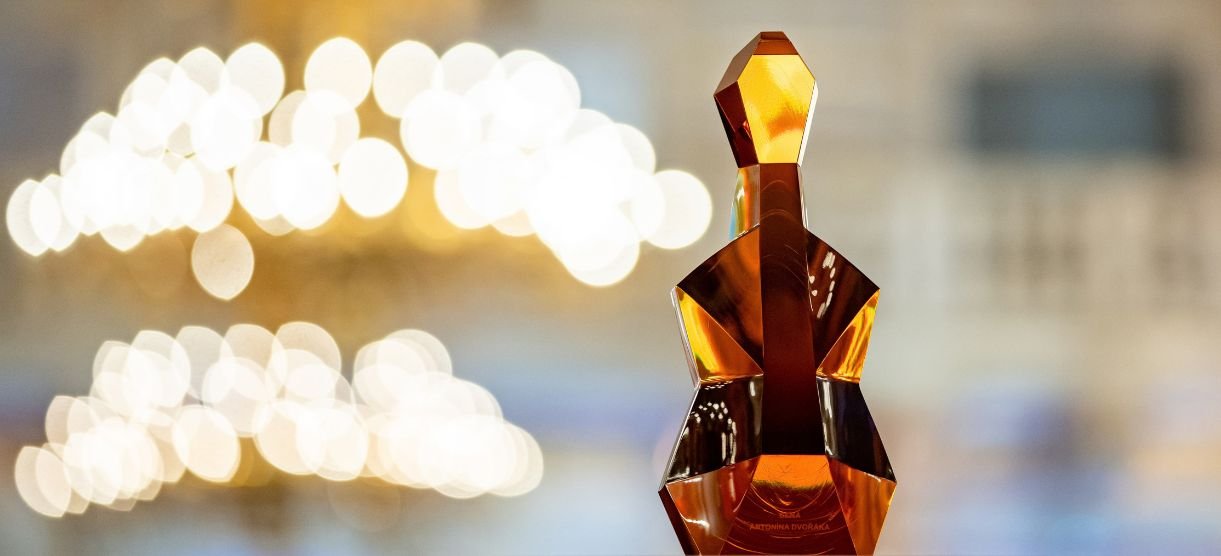
Antonín Dvořák Award Ceremony
Humoresque: Antonín Dvořák / Stephan Koncz
Noriet saule vakarā: Sebastian Gürtler
Song for Peace: Sting / Stephan Koncz
Prélude in E Minor, Op. 28, No. 4: Fryderyk Chopin / Stephan Koncz
Allegro Tangabile: Astor Piazzolla / Sebastian Gürtler
Babarababa: Sebastian Gürtler
Ciocârlia: Stephan Koncz
Waltzing Matilda: Stephan Koncz
Philharmonix weaves playfulness into classical music, sneaking a light-hearted spirit into what is traditionally a rather serious affair. When an ensemble as brilliant as Philharmonix takes the stage, it doesn’t matter whether they are performing original works or arrangements of classical music. A song by Sting, a Chopin prelude and an Australian folk tune all sound phenomenal.
Queen pays tribute to Janáček, The Cunning Little Vixen seems to listen to an arrangement of a song to the moon, Beethoven swings, and the passion of Argentine tango vibrates with the energy of the Romanian wilderness. Philharmonix concerts intertwine genres and continents as well as a cast of musicians from the Vienna and Berlin Philharmonic orchestras. On this occasion, they will be joined by the outstanding Czech violinist Josef Špaček.
Their collaborative performance will accompany the Antonín Dvořák Award ceremony, paying homage to a composer who viewed music as boundless and who, through it, won the hearts of audiences around the world. In a sense, this concert by Philharmonix and Josef Špaček brings the whole world together to salute Dvořák in return.
The “life-enhancing” Pavel Haas Quartet (Arts Desk) is revered across the globe for its richness of timbre, infectious passion and intuitive rapport. Playing “as if their lives depend on it” (The Times), the quartet perform at the world’s most prestigious concert halls and has received numerous high-profile awards for its recordings, firmly establishing them as one of the world’s foremost string quartets.
Highlights of the 25/26 season include returns to the Musikverein, Vienna; Philharmonie de Paris; Pierre Boulez Saal, Berlin; Elbphilharmonie, Hamburg; Muziekgebouw, Amsterdam; Konserthuset Stockholm and Wigmore Hall. Further afield, the Quartet returns to Taiwan’s National Concert Hall and the Seoul Arts Center, and tour North America in March 2026. Renowned as the leading interpreter of Eastern European chamber music masterpieces, the Quartet was named as Ambassador for the Year of Czech Music in 2024. From 2025 until 2027, the Pavel Haas Quartet is Artist-in-Residence at Smetana’s Litomyšl Festival, alongside the Czech Philharmonic.
The Quartet regularly appears at major venues including Wigmore Hall, London; Philharmonie, Berlin; Konzerthaus and Musikverein, Vienna; Concertgebouw, Amsterdam; Elbphilharmonie, Hamburg; Tonhalle Zürich; Philharmonie de Paris; Accademia di Santa Cecilia; BOZAR, Brussels; NCPA Beijing; LG Arts Centre and Seoul Arts Center, Seoul and Carnegie Hall, New York. In celebration of its 20th anniversary, the Quartet appeared on the cover of The Strad and was the featured interview in BBC Music Magazine. The latter named it among the “10 greatest string quartet ensembles of all time,” describing the Quartet as “stylistically powerful and richly sonorous, [and] known for its passionate and fearless performances.”
The Pavel Haas Quartet records exclusively for Supraphon. It has received five Gramophone Awards for its recordings of Dvořák, Smetana, Schubert, Janáček, and Haas. In 2026, the quartet received the prestigious ICMA award in the chamber music category for the recording of Bohuslav Martinů’s String Quartets No. 2, 3, 5 and 7.
Since winning the Paolo Borciani competition in Italy in 2005, further highlights early in their career have included being nominated as ECHO Rising Stars in 2007, participating in the BBC New Generation Artists scheme between 2007–2009 and being award the Special Ensemble Scholarship by the Borletti-Buitoni Trust in 2010. The Quartet is based in Prague and studied with the late Milan Škampa, the legendary violist of the Smetana Quartet. They take their name from the Czech-Jewish composer Pavel Haas (1899–1944) who was imprisoned at Theresienstadt in 1941 and was tragically killed at Auschwitz three years later. His legacy includes three wonderful string quartets.
Veronika Jarůšková – 1st violin, Marek Zwiebel – 2nd violin, Šimon Truszka – viola, Peter Jarůšek – cello
zdroj: artevisio
Principal patron

Partner

Partner

Organizer
Award produced by

In cooperation with

Broadcaster

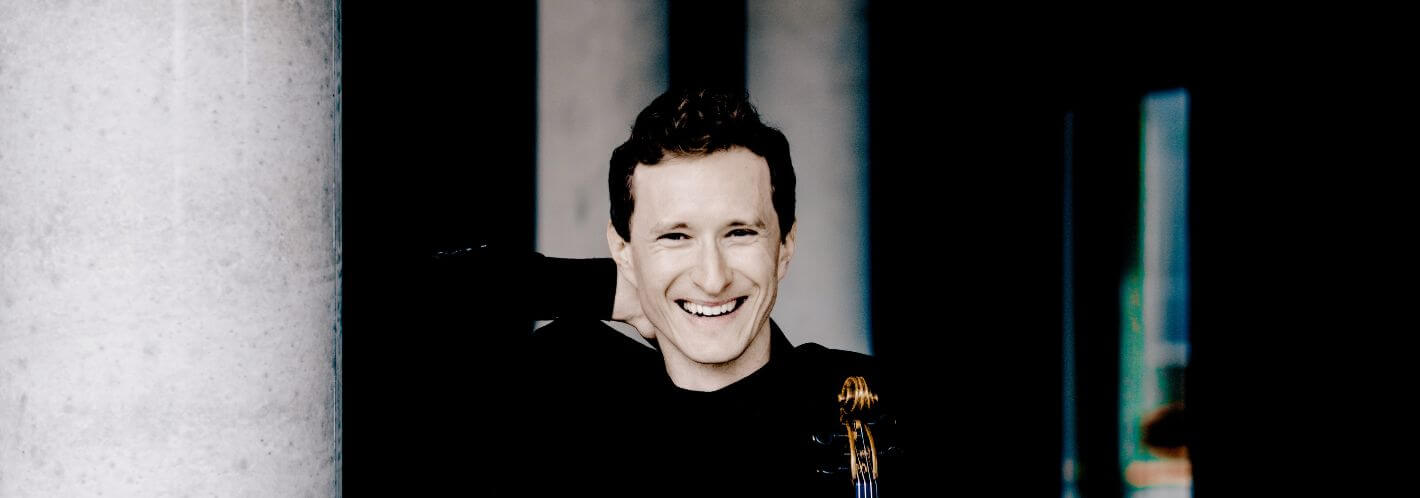
Praised for his remarkable range of colours, his confident and concentrated stage presence, his virtuosity and technical poise as well as the beauty of his tone Josef Špaček has gradually emerged as one of the leading violinists of his generation. His performances of a wide range of repertoire demonstrate his “astonishing articulation and athleticism” (The Scotsman) and “a richness and piquancy of timbre.” (The Telegraph).
Forthcoming highlights include debuts with the Pittsburgh Symphony Orchestra and Petr Popelka, London Philharmonic Orchestra and Edward Gardner, NHK Symphony Orchestra and Jakub Hrůša and Hong Kong Philharmonic Orchestra and Anja Bihlmaier, as well as returns to the Konzerthausorchester Berlin and Joanna Mallwitz, Bamberger Symphoniker and Aurel Dawidiuk, Symphoniker Hamburg and Adam Hickox, Deutsche Radio Philharmonie and Kevin John Edusei, Dutch Radio Philharmonic and Stephan Zilias, the Czech Philharmonic and Thomas Adès and George Enescu Philharmonic and Tomáš Netopil.
Recent highlights include highly successful debuts with the Chicago Symphony Orchestra and Jakub Hrůša (“his steely technique handling the angular bonhomie as surely as the passing lyrical strains. In the Andante, Špaček rendered the lovely main theme with a beguiling tenderness and sweetness of tone that recalled Suk, his illustrious predecessor.” - CCR), with the Atlanta Symphony Orchestra and Nathalie Stutzmann, the Gewandhausorchester Leipzig and Andrew Manze, the Orchestre National de Lille and Jan-Willem de Vriend, concerts with Sinfonia Varsovia and Marta Gardolińska in Warsaw and Brussels, a concerto and recital tour in China, as well as returns to the Dresdner Philharmonie and Kahchun Wong, the Berner Symphoniker and Anna Sułkowska-Migoń and the Macao Orchestra and Lio Kuokman, as well as a residency with the Residentie Orchestra The Hague with Anja Bihlmaier and Jun Märkl. He also returned to the Verbier Festival for a performance of the Barber concerto.
He equally enjoys giving recitals and playing chamber music and is a regular guest at festivals and in concert halls throughout Europe. He ist he artistic director and co-founder of the Troja chmber music festival Festival, in Prague.
With cellist Timotheos Gavriilidis-Petrin and pianist George Xiaoyuan Fu he forms the Trio Zimbalist. The trio regularly tours in the US and Europe. Their first CD release with piano trios of Weinberg, Auerbach and Dvořák received high accolades from the international press, including Gramophone Magazine’s Editor’s Choice in March 2024, describing the album as “miraculously fresh,” “imaginative,” and “inventive”.
In September 2023 Supraphon released Josef’s recording of Martinů’s Concerto for violin, piano and orchestra, violin sonata no. 3 and Five Short Pieces with pianist Miroslav Sekera and the Prague Radio Symphony Orchestra, conducted by Petr Popelka. The BBC Music Magazine commented that “Špaček and Sekera are virtuosic in the opening movement and searching in the Adagio. There’s a special piquancy in their Scherzo, and all these elements are combined in the finale, where Špaček’s violin tone has shining poise.”
Previous recordings for the Supraphon label are an album with cellist Tomáš Jamník, featuring works for violin and cello by Janáček, Martinů, Schulhoff and Klein; his highly praised recording of the violin concertos of Dvořák and Janáček, coupled with the Fantasy of Suk, with the Czech Philharmonic Orchestra conducted by Jiří Bělohlávek and a recital disc with works for violin and piano by Smetana, Janáček and Prokofiev with pianist Miroslav Sekera.
Josef Špaček studied with Itzhak Perlman at The Juilliard School in New York, Ida Kavafian and Jaime Laredo at the Curtis Institute of Music in Philadelphia, and with Jaroslav Foltýn at the Prague Conservatory.
After having served as concertmaster of the Czech Philharmonic Orchestra for nine seasons until the end of the 2019/20, he has devoted himself exclusively to his solo career. The orchestra has named him the Associate Artist in Residence.
Josef Špaček performs on the ca. 1732 “LeBrun; Bouthillard” Guarneri del Gesù violin, generously on loan from an anonymous sponsor.
source: agentura Makropulos
photo © Andrej Grilc
Founded by members of the Berliner and Wiener Philharmoniker, the Philharmonix play everything they have always wanted to play. Their trademark: brilliant arrangements, incomparable virtuosity, and, above all, unbridled joy in making music together, which spills over to the listener in a matter of seconds.
In their brilliant new adaptations, they work on pop, jazz, swing, folk music, klezmer, and famous melodies from big Hollywood films in addition to classical works. They bring out previously unheard, original aspects to all compositions - and skilfully combine things that otherwise do not belong together. So not everything is classical music; but everything has musical class.
Their music is influenced by the sound aesthetics and tradition of the top orchestras for which they also work: Thilo Fechner (viola), Daniel Ottensamer (clarinet), and Ödön Rácz (double bass) play with the Wiener Philharmoniker; Stephan Koncz (cello) and Noah Bendix-Balgley (violin) with the Berliner Philharmoniker. They are joined by the outstanding soloists Christoph Traxler (piano) and Sebastian Gürtler (violin), who, together with Stephan Koncz, is also the compositional head of the ensemble. Their aspiration:
"The mind must rejoice, the heart exult, and the leg must twitch."
The ensemble records exclusively for Deutsche Grammophon and released their two albums The Vienna Berlin Music Club Vol. I and The Vienna Berlin Music Club Vol. II in 2018 and 2019. In September 2022, the third album The Vienna Berlin Music Club III was released. "Classical Music without Borders"—rarely has a category name been more fitting than in the case of the Philharmonix, who were awarded the OPUS KLASSIK award in 2018 for their first recording. The classical music expertise demonstrated by all members does not prove to be a barrier, but rather an inspiring door opener to new listening experiences.
The Philharmonix appear regularly at the Wiener Konzerthaus. Here they have held a subscription cycle in the Great Hall for several seasons, as well as at the Berliner Philharmonie, Tonhalle Düsseldorf, Kulturpalast Dresden, Philharmonie Essen, Philharmonie Luxembourg, and the Elbphilharmonie in Hamburg.
source: Konzertdirektion Schmid

The Spanish Hall is the largest ceremonial space of the Prague Castle and is located in the northern wing of the New Royal Palace. It was built at the beginning of the 17th century during the reign of Rudolf II, and its rich stucco decoration is one of the most advanced manifestations of Mannerism in Bohemia before the outbreak of the Thirty Years' War.
