Bohuslav Martinů: Memorial to Lidice, H. 296
Petr Wajsar: Violoncelloops – Concerto for Cello and Orchestra (world premiere)
Pyotr Ilyich Tchaikovsky: Symphony No. 5 in E Minor, Op. 64
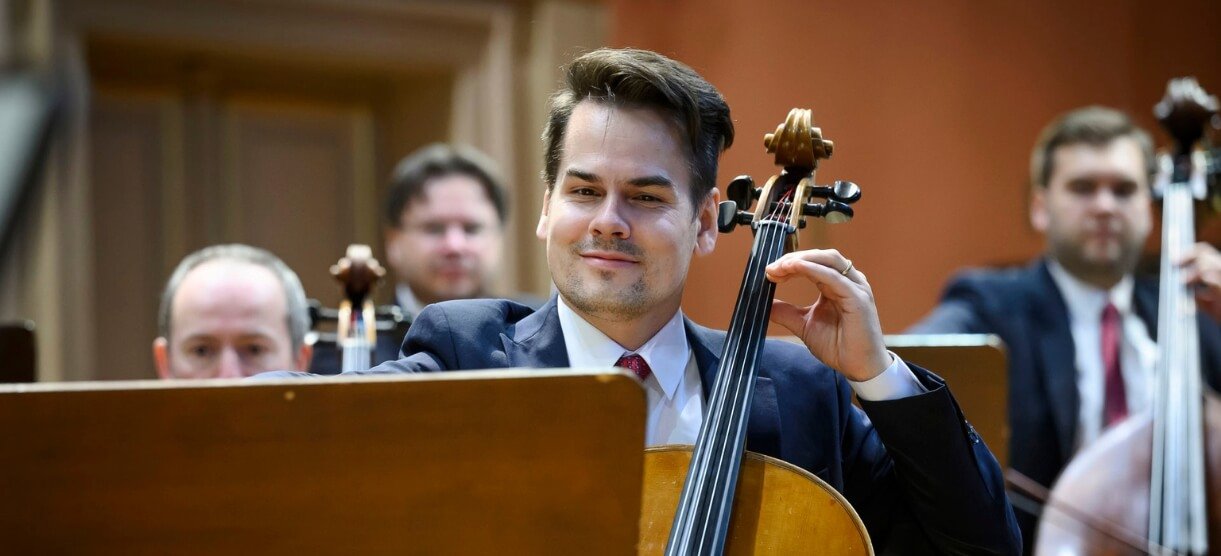
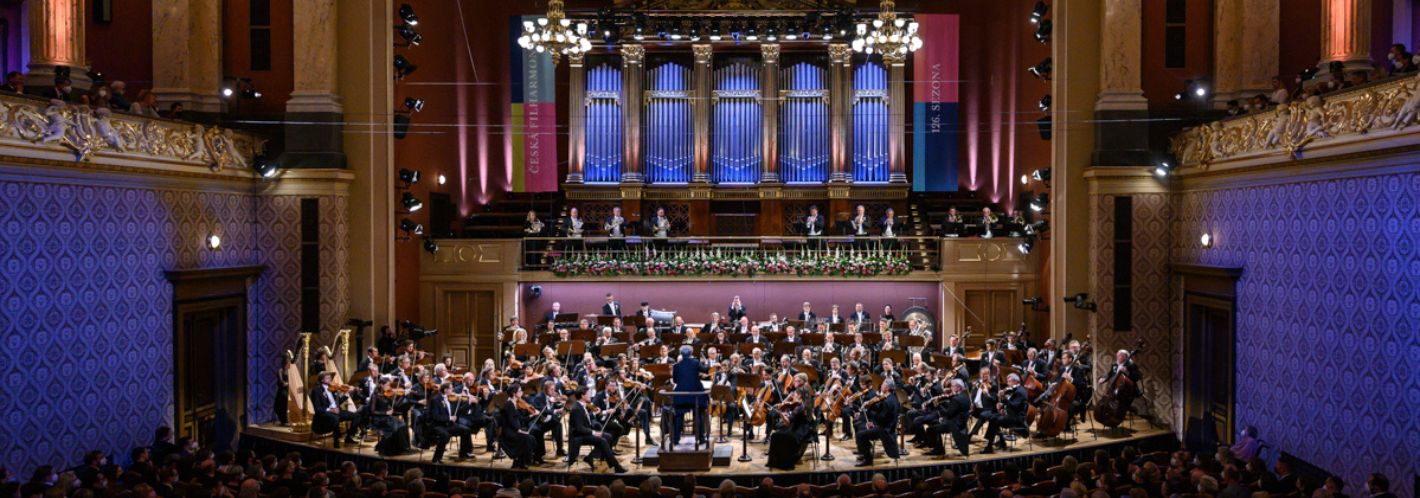
The past and the present, tragedy and emotion, the classics and technology. Deep respect for the victims of the Lidice massacre, seemingly taking the place of a moment of silence for all who are dying needlessly in the wars of today. Only afterwards do we arrive at the immediate present with the composition Violoncelloops by Petr Wajsar, who combines classical and popular music with an incredibly deft touch. However, his “loops” are not those of a DJ playing an LP. Instead, the loops are of a cellist in the same live performance. And the principal cellist of the Czech Philharmonic, Václav Petr, really knows how to be “lively”. The music’s tempestuous contrasts and shifting emotions are a depiction of unforeseeable fate, as if embodying all of the twists and turns of our times, when people are able to love each other or make war with the same intensity. All of the seemingly irreconcilable contradictions will remain unified thanks to the refined sound of the Czech Philharmonic under the baton of the wonderful conductor Ingo Metzmacher.
Named Gramophone’s Orchestra of the Year in 2024, the Czech Philharmonic is recognised as one of the world’s leading orchestras and remains the Czech Republic’s key cultural ambassador. Now in its 131st season, the orchestra combines a deep-rooted musical tradition with an international artistic outlook, expanding its profile through tours, residencies and recordings.
During the 2024 Year of Czech Music, the Czech Philharmonic and its Chief Conductor and Music Director Semyon Bychkov gave a three-day residency at New York’s Carnegie Hall. That same year saw the release of their recording of Smetana’s Má vlast (My Country), which went onto win the 2025 BBC Music Magazine Orchestral Award. In addition to Czech music, the orchestra’s long-standing relationship with composers such as Brahms, Tchaikovsky and Mahler has resulted in a series of benchmark recordings, including The Tchaikovsky Project (2019) and the first new cycle of Mahler symphonies in more than 40 years, released in 2026. The next release with Bychkov features Shostakovich’s Symphony Nos. 5 and 7.
The 131st season opens in Prague with Shostakovich’s Violin Concerto No. 1 featuring Artist-in-Residence Janine Jansen, alongside Dvořák’s Symphony No. 7. Touring highlights include the orchestra’s first visit in over 50 years to Sweden and Finland, a return to Lucerne Festival, and residencies in London, Vienna and Hamburg. At home, the Czech Philharmonic performs at the Rudolfinum in Prague and at leading Czech festivals including Dvořák Prague, Prague Spring, Smetana Litomyšl, and for the first time, Janáček Brno.
Repertoire this season with Bychkov includes Má vlast; works by Mussorgsky, Ravel, Adams, Strauss, Glanert and Britten; and a major focus on Rachmaninoff, presented both in Prague and on tour. Beethoven’s Ninth Symphony, performed with the Prague Philharmonic Choir, will mark the 200th anniversary of the composer’s death in 2027.
Principal Guest Conductors Simon Rattle and Jakub Hrůša both return this season. With Rattle, the orchestra presents music by Barber, Shostakovich, Debussy, Szymanowski and the Czech premiere of Composer-in-Residence Thomas Adès’s Aquifer. With Hrůša – appointed last year as the orchestra’s next Chief Conductor and Music Director (Renáta Kellnerová Chair) from the 2028/2029 season – they perform works by Strauss, Beethoven, Suk and a world premiere by Martin Smolka.
Guest conductors this season include Vasily Petrenko, Herbert Blomstedt, Elim Chan, Maxim Emilyanchev, and Daniel Harding, who closes the subscription season with the Accademia Nazionale di Santa Cecilia. Guest soloists include Yuja Wang, Behzod Abduraimov, Mao Fujita, Yunchan Lim, Seong-Jin Cho, Karen Gomyo, Radek Baborák and Kirill Gerstein.
The Czech Philharmonic’s distinguished history reflects the Czech Republic’s complex political past and its central European location. An early champion of the music of Martinů and Janáček, the Czech Philharmonic gave its first concert in 1896 with an all-Dvořák programme conducted by the composer itself.
Alongside its commitment to championing Czech composers, the orchestra’s belief in the power of music to transform lives remains a defining principle. The Czech Philharmonic Youth Orchestra, Orchestral Academy, and Jiří Bělohlávek Prize for young musicians, form part of the orchestra’s education strategy which engages with more than 400 schools. An inspirational music and song programme led by Ida Kelarová continues to support social inclusion by giving voice to Romany communities through music.
source: Česká filharmonie
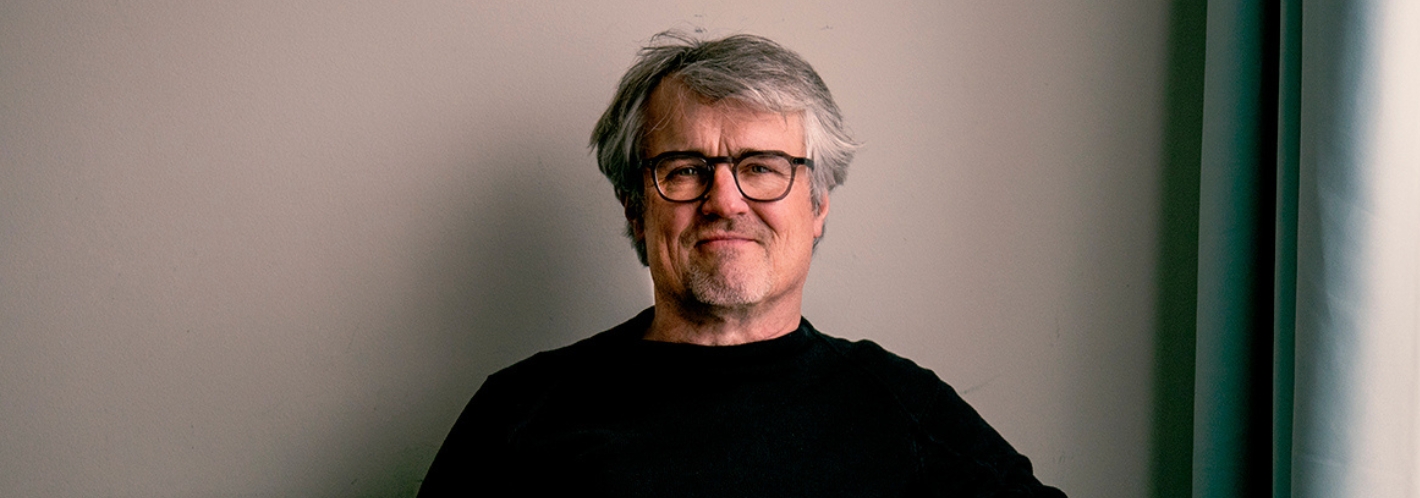
Whether as an opera conductor, orchestra leader, festival director or book author: Ingo Metzmacher is consistently committed to music, especially of the twentieth and twenty-first centuries. Making the new sound familiar and the familiar sound new has been his focus since the beginning of his career.
Ingo Metzmacher was General Music Director of the Hamburg State Opera from 1997 to 2005 and subsequently Chief Conductor at the Dutch National Opera in Amsterdam, as well as Chief Conductor and Artistic Director of the Deutsches Symphonie-Orchester Berlin from 2007 to 2010. Since 2016 he has been the Artistic Director of the KunstFestSpiele Herrenhausen, whose next festival edition will take place from 16 May to 2 June 2024.
Ingo Metzmacher is a frequent guest with leading orchestras such as the Vienna Philharmonic, the Cleveland Orchestra, the Gewandhausorchester, the Vienna Symphony Orchestra and Ensemble Modern, as well as at opera houses and festivals such as the Vienna State Opera, the Opéra national de Paris, Milan's Teatro alla Scala, the Salzburg Festival and the Festival d'Aix-en-Provence.
Highlights of the 2024/25 include his fifth tour with the Gustav Mahler Jugendorchester, performances with the Gewandhausorchester, Orquesta Sinfónica de RTVE, Wiener Symphoniker, SWR Symphonieorchester, NDR Elbphilharmonie Orchester and the Armenian National Philharmonic Orchestra, and the world premiere of Francesco Filidei’s Il nome della rosa at Teatro alla Scala. He is conducting a new production of lbéric Magnard's Guercœur at the Opéra national du Rhin, Leonard Bernstein's Mass - A Theatre Piece for Singers, Players and Dancers with the NDR Radiophilharmonie and nine choirs from Hanover as part of the KunstFestSpielen Herrenhausen, as well as the closing concert of the Donaueschinger Musiktage.
Metzmacher’s wide-ranging discography includes live recordings of his legendary New Year’s Eve concerts in Hamburg from 1999 to 2004 entitled Who’s Afraid of 20th Century Music?, a complete recording of Hartmann’s symphonies with the Bamberg Symphony Orchestra, the world premiere of Henze’s Ninth Symphony with the Berlin Philharmonic and Messiaen’s Eclairs sur l'Au-delà… with the Vienna Philharmonic. Most recently, he released two recordings with Ensemble Modern: Andre’s cycle riss and Beschenkt – 40 miniatures celebrating the ensembles 40th anniversary.
He is the author of two books: Keine Angst vor neuen Tönen [Don’t Be Afraid of New Sounds] and Vorhang auf! Oper entdecken und erleben [Curtain Up! Discovering and Experiencing Opera].
source: OPUS 3 ARTIST
Already in his childhood, the cellist Václav Petr won a number of prizes at international music competitions including Concertino Praga, the Bohuslav Martinů Foundation Competition, Prague Junior Note, Talents for Europe, and the International Cello Competition in Liezen, Austria. He is a graduate of the Academy of Performing Arts in Prague, and he furthered his education at the Universität der Künste in Berlin. He has also taken part at many masterclasses in Kronberg, Hamburg, Vaduz, and Baden-Baden, and he has participated at the European Academy of Music in Bonn. He has been appearing as a soloist for twenty years with important Czech and foreign orchestras. Since 2013 he has been the principal cellist of the Czech Philharmonic. He also performs chamber music: since 2009 he has been a member of the Josef Suk Piano Quartet, with which he won first prize in a competition of chamber ensembles in Val Tidone, Italy, and at one of the most prestigious competitions for chamber ensembles with piano, Premio Trio di Trieste. He plays a cello from the workshop of the master instrument maker Giovanni Battista Guadagnini (1757).

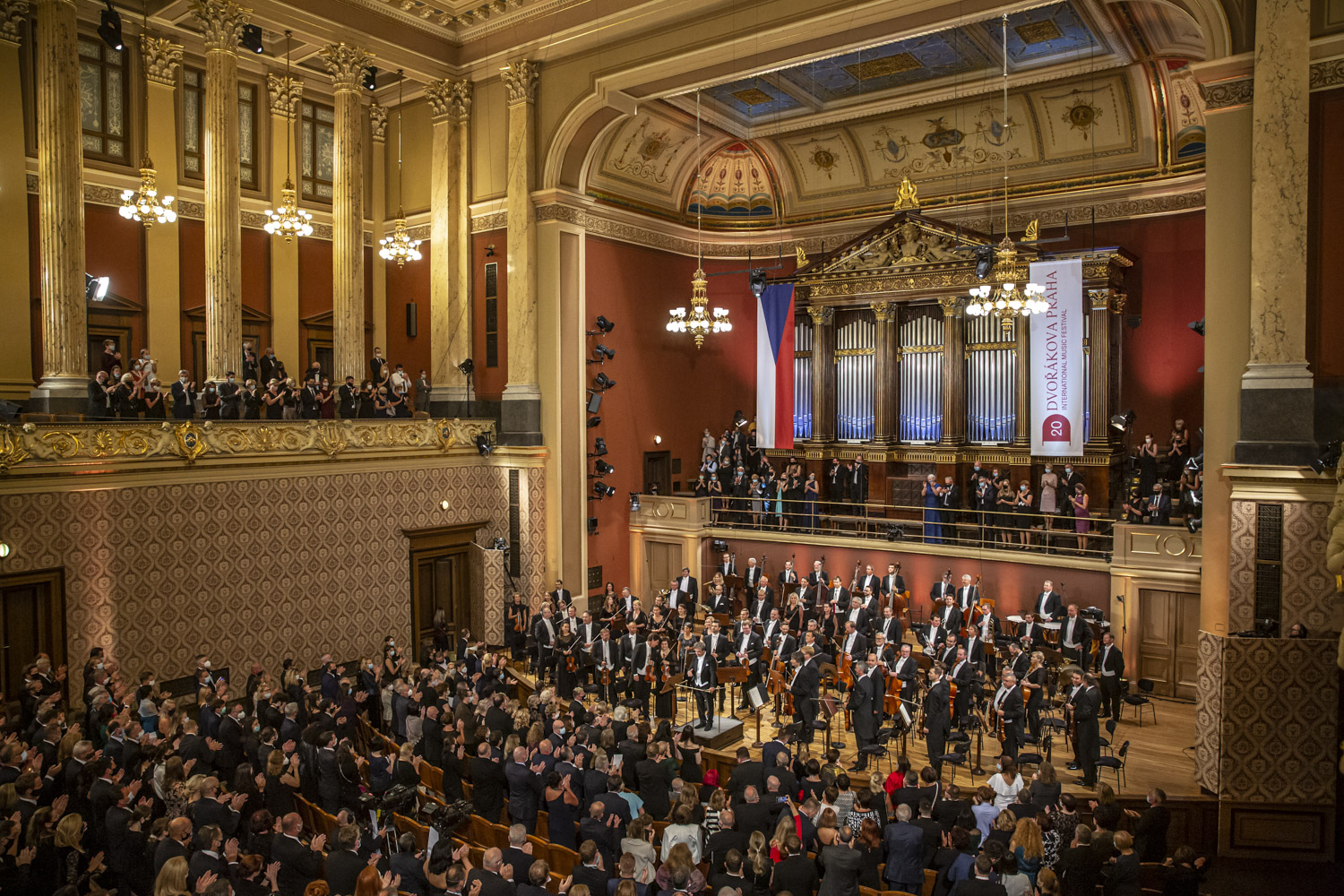
The Rudolfinum is one of the most important Neo-Renaissance edifices in the Czech Republic. In its conception as a multi-purpose cultural centre it was quite unique in Europe at the time of its construction. Based on a joint design by two outstanding Czech architects, Josef Zítek and Josef Schultz, a magnificent building was erected serving for concerts, as a gallery, and as a museum. The grand opening on 7 February 1885 was attended by Crown Prince Rudolph of Austria, in whose honour the structure was named. In 1896 the very first concert of the Czech Philharmonic Orchestra took place in the Rudolfinum's main concert hall, under the baton of the composer Antonín Dvořák whose name was later bestowed on the hall.