Johannes Brahms: Ein deutsches Requiem, Op. 45
“Blessed are those who mourn, for they shall be comforted.” In addition to being one of Jesus’s beatitudes, this verse is the opening line of Johannes Brahms’s German Requiem. This enthralling composition for soloists, choir, and orchestra immediately shows us that its focus is not on the dead, but rather on those who are alive and mourning the passing of their loved ones.
Brahms began composing Ein deutsches Requiem following the death of his mother, while also reflecting on the demise of his close friend, fellow composer Robert Schumann. Perhaps he wanted to come to terms not only with his personal loss, but also with the passing of the most eminent proponent of German Romanticism, a supremely gifted composer, journalist, and brilliant mind.
From the very beginning, Brahms kept Martin Luther’s German translation of the Bible close at hand, emphasising the motif of consolation throughout. He was also confident that his anguish would eventually wear off. The whole piece of music is suffused with humanism and has little in common with liturgy and praying for the dead.
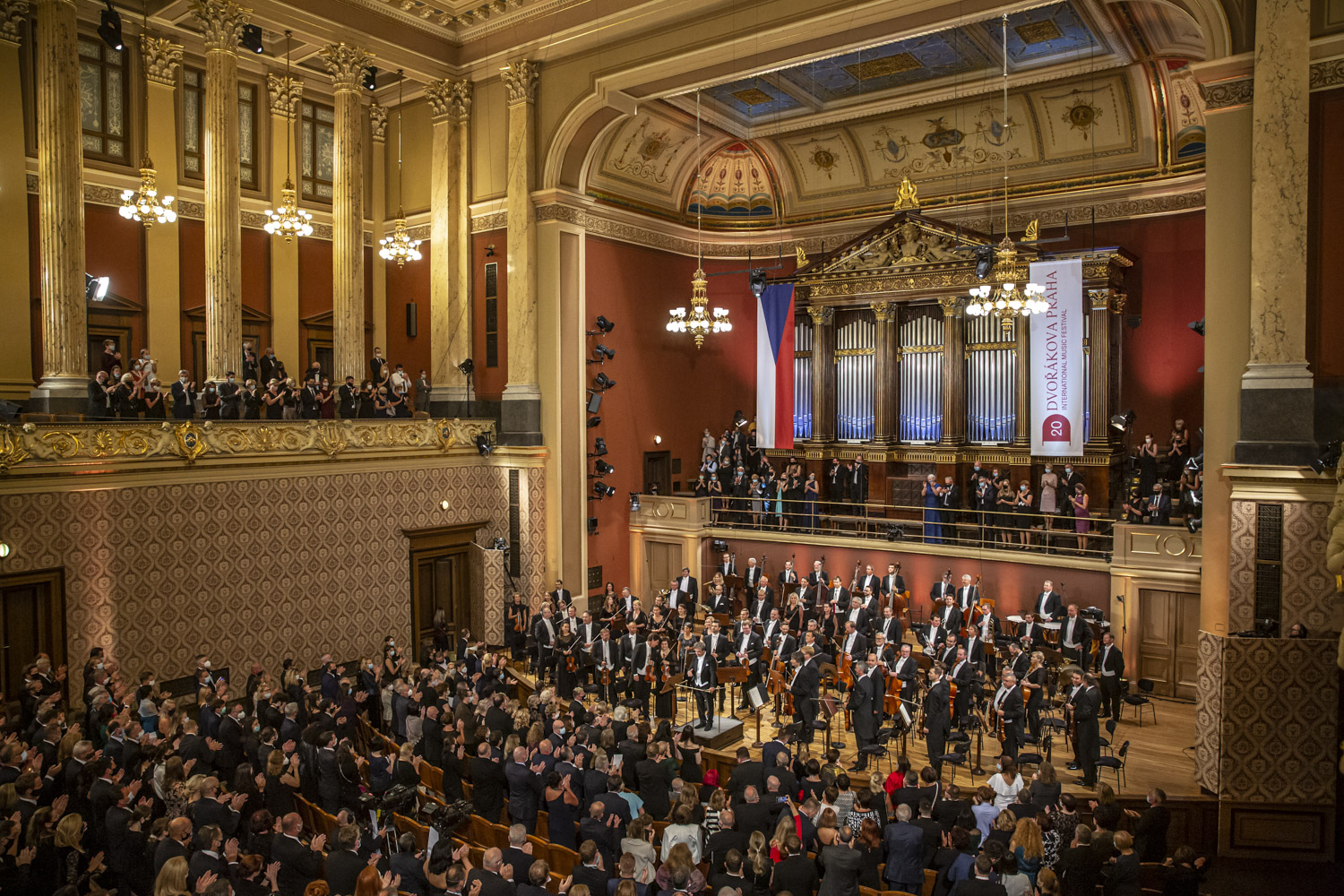
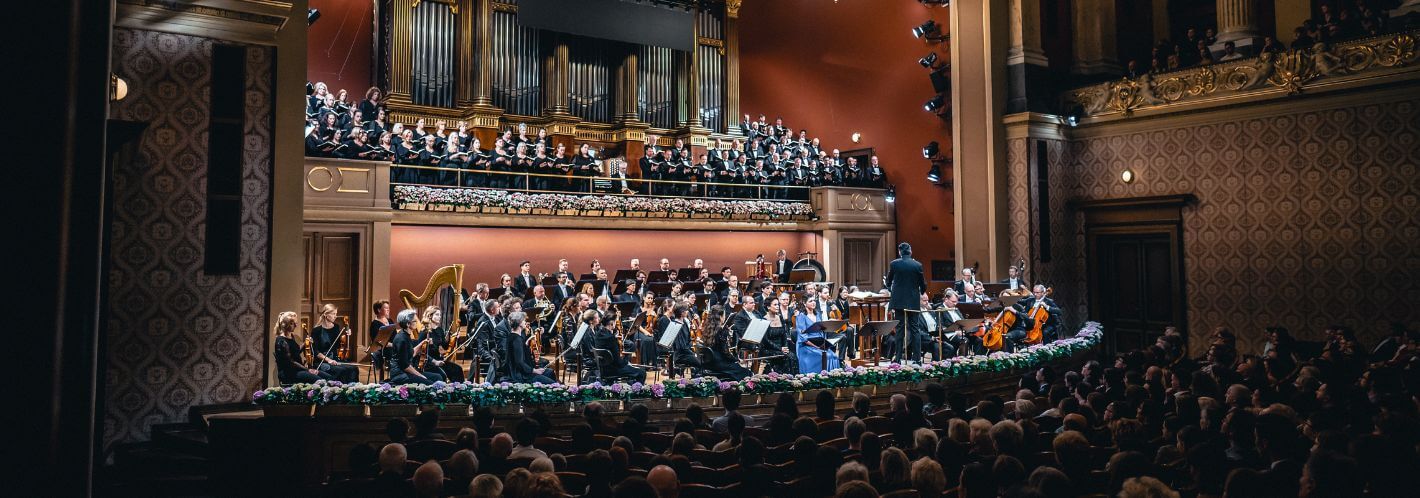
This stunning work, which will leave audiences feeling spiritually uplifted, is part of the commemoration of the 190th anniversary of Brahms’s birth. This legacy will be presented by the resident orchestra of Dvořák Prague, conductor Sakari Oramo, soloists Anu Komsi and Christian Senn, as well as the Prague Philharmonic Choir.
Named Gramophone’s Orchestra of the Year in 2024, the Czech Philharmonic is recognised as one of the world’s leading orchestras and remains the Czech Republic’s key cultural ambassador. Now in its 131st season, the orchestra combines a deep-rooted musical tradition with an international artistic outlook, expanding its profile through tours, residencies and recordings.
During the 2024 Year of Czech Music, the Czech Philharmonic and its Chief Conductor and Music Director Semyon Bychkov gave a three-day residency at New York’s Carnegie Hall. That same year saw the release of their recording of Smetana’s Má vlast (My Country), which went onto win the 2025 BBC Music Magazine Orchestral Award. In addition to Czech music, the orchestra’s long-standing relationship with composers such as Brahms, Tchaikovsky and Mahler has resulted in a series of benchmark recordings, including The Tchaikovsky Project (2019) and the first new cycle of Mahler symphonies in more than 40 years, released in 2026. The next release with Bychkov features Shostakovich’s Symphony Nos. 5 and 7.
The 131st season opens in Prague with Shostakovich’s Violin Concerto No. 1 featuring Artist-in-Residence Janine Jansen, alongside Dvořák’s Symphony No. 7. Touring highlights include the orchestra’s first visit in over 50 years to Sweden and Finland, a return to Lucerne Festival, and residencies in London, Vienna and Hamburg. At home, the Czech Philharmonic performs at the Rudolfinum in Prague and at leading Czech festivals including Dvořák Prague, Prague Spring, Smetana Litomyšl, and for the first time, Janáček Brno.
Repertoire this season with Bychkov includes Má vlast; works by Mussorgsky, Ravel, Adams, Strauss, Glanert and Britten; and a major focus on Rachmaninoff, presented both in Prague and on tour. Beethoven’s Ninth Symphony, performed with the Prague Philharmonic Choir, will mark the 200th anniversary of the composer’s death in 2027.
Principal Guest Conductors Simon Rattle and Jakub Hrůša both return this season. With Rattle, the orchestra presents music by Barber, Shostakovich, Debussy, Szymanowski and the Czech premiere of Composer-in-Residence Thomas Adès’s Aquifer. With Hrůša – appointed last year as the orchestra’s next Chief Conductor and Music Director (Renáta Kellnerová Chair) from the 2028/2029 season – they perform works by Strauss, Beethoven, Suk and a world premiere by Martin Smolka.
Guest conductors this season include Vasily Petrenko, Herbert Blomstedt, Elim Chan, Maxim Emilyanchev, and Daniel Harding, who closes the subscription season with the Accademia Nazionale di Santa Cecilia. Guest soloists include Yuja Wang, Behzod Abduraimov, Mao Fujita, Yunchan Lim, Seong-Jin Cho, Karen Gomyo, Radek Baborák and Kirill Gerstein.
The Czech Philharmonic’s distinguished history reflects the Czech Republic’s complex political past and its central European location. An early champion of the music of Martinů and Janáček, the Czech Philharmonic gave its first concert in 1896 with an all-Dvořák programme conducted by the composer itself.
Alongside its commitment to championing Czech composers, the orchestra’s belief in the power of music to transform lives remains a defining principle. The Czech Philharmonic Youth Orchestra, Orchestral Academy, and Jiří Bělohlávek Prize for young musicians, form part of the orchestra’s education strategy which engages with more than 400 schools. An inspirational music and song programme led by Ida Kelarová continues to support social inclusion by giving voice to Romany communities through music.
source: Česká filharmonie
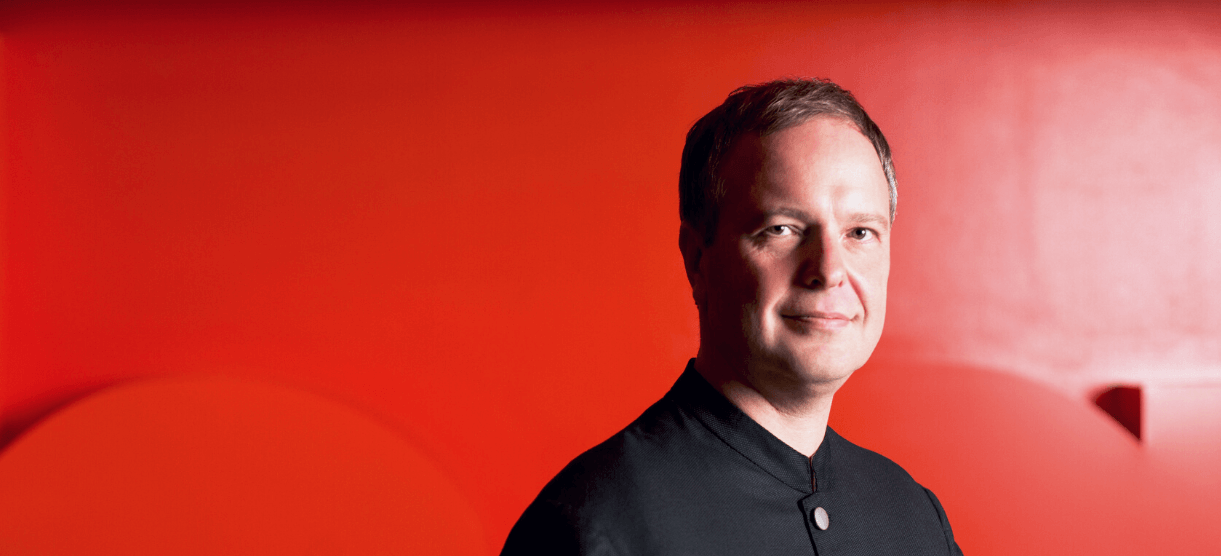
Sakari Oramo is Chief Conductor of the BBC Symphony Orchestra and Conductor Laureate of the Royal Stockholm Philharmonic after thirteen years of leading the orchestra as their Chief Conductor. A guest conductor at the highest international level and a prolific recording artist, his performances combine structural cohesion with authority, elegance and passionate delivery.
Guest engagements during the 2022/23 season include returns to the Berliner Philharmoniker, Finnish Radio Symphony Orchestra, Gürzenich-Orchester Köln, NDR Elbphilharmonie Orchester, and Orchestra dell’Accademia Nazionale di Santa Cecilia.
Engagements in the past season have included appearances with Royal Stockholm Philharmonic, Wiener Symphoniker, Gewandhausorchester Leipzig, Berliner Philharmoniker and NDR Elbhilharmonie Orchester.
In 2018, he conducted the European premiere of Brett Dean’s new Cello Concerto, performed by Alban Gerhardt with Berliner Philharmoniker. Oramo has most recently worked with the NDR Elbphilharmonie Orchester, Staatskapelle Dresden, Wiener Philharmoniker, Czech Philharmonic, Boston Symphony, New York Philharmonic and Helsinki Philharmonic orchestras.
2022/23 marks Oramo’s tenth season with the BBCSO. With this Orchestra, he continues to champion new and rarely performed works – including Dora Pejačević’s Symphony and Piano Concerto with Peter Donohoe, William Alwyn’s opera Miss Julie and Betsy Jolas’ Onze Lieder – presenting them alongside stalwarts such as Mendelssohn’s Elijah and Haydn’s Trumpet Concerto (with Håkan Hardenberger). The season also includes BBCSO’s Tour to Spain and performance at the Last Night of the Proms. Oramo is a regular conductor at the BBC Proms and during the summer of 2022 he conducted several with the BBCSO and Chorus – including the First Night of the Proms presenting Verdi’s Requiem.
Music Director of the City of Birmingham Symphony Orchestra between 1998 and 2008, Oramo has served as Finnish Radio Symphony Orchestra’s Honorary Conductor since 2012, following a decade as their Chief Conductor. He was also the Principal Conductor of the West Coast Kokkola Opera from 2004 to 2018 and Principal Conductor of the Ostrobothnian Chamber Orchestra from 2013 to 2019. An accomplished violinist, Oramo was originally concertmaster of the Finnish Radio Symphony Orchestra. In 2014 he made his debut in the BBC Proms Chamber Music series, performing Prokofiev’s Sonata for Two Violins with Janine Jansen.
Recording successes include the BBC Music Magazine’s Orchestra award for Nielsen Symphonies Nos. 1 and 3 with Royal Stockholm Philharmonic Orchestra, which completes their highly acclaimed Nielsen cycle on the BIS label, and a Gramophone Award win in the 2019 Orchestral category for Rued Langgaard Symphonies Nos.2 and 6, and Jacob Gade’s Tango Jalousie with Wiener Philharmoniker and soprano Anu Komsi. Busoni’s Piano Concerto with Kirill Gerstein recorded with Boston Symphony Orchestra (Myrios) won the Audio and Video category at the 2020 ICMA awards. Other recent releases include the BBC Symphony Orchestra orchestral works by Sibelius (including the Lemminkäinen Suite), Rachmaninov Piano Concertos Nos.2 and 3 with Yevgeny Sudbin, and Florent Schmitt: Suites from 'Antoine et Cléopâtre' and Symphony No.2.
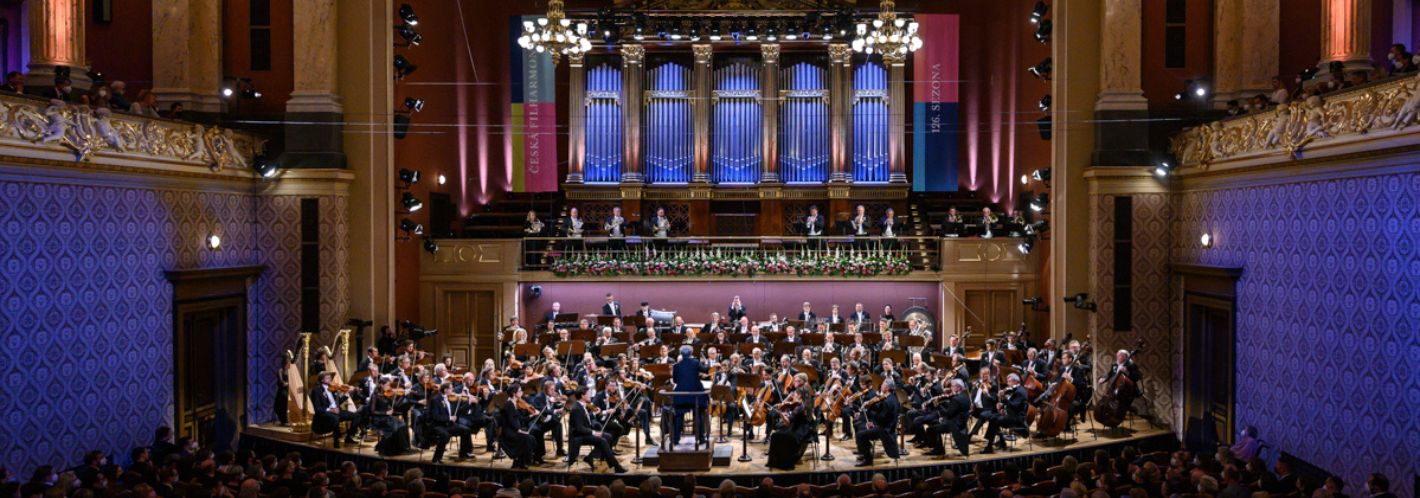
The Prague Philharmonic Choir (PPC) was founded in 1935 by choirmaster and teacher Jan Kühn. Now in its 91st season, it is the oldest professional choir in the Czech Republic. The choir is celebrated beyond Czech borders, especially for its interpretations of oratorios and cantatas. Lukáš Vasilek has served as Principal Conductor and Artistic Director since 2007, joined by Lukáš Kozubík as the choir’s Second Choirmaster.
Under Lukáš Vasilek’s leadership, the Prague Philharmonic Choir has established a reputation as a highly esteemed performing partner of leading international orchestras. At home, the ensemble collaborates regularly with the Czech Philharmonic and, for its own choral concerts, with the Prague Philharmonia. Internationally, the PPC has worked with ensembles such as the Berlin and Dresden Philharmonic Orchestras, Wiener Symphoniker, NDR Elbphilharmonie Orchestra, and the Hong Kong Philharmonic Orchestra.
The PPC has also gained extensive experience working with the world’s top conductors, including Semyon Bychkov, Jakub Hrůša, and Sir Simon Rattle. The choir regularly appears at the Czech Republic’s most renowned festivals, such as Smetana’s Litomyšl, Prague Spring, Dvořák Prague, and Days of Bohuslav Martinů. Since 2010, the PPC has served as Choir in Residence at the Bregenzer Festspiele.
In its 91st season, the Prague Philharmonic Choir will embark on further exciting collaborations with world-renowned conductors, including Zubin Mehta, Antonio Pappano, and Giovanni Antonini.
Alongside its performances, the PPC engages in numerous educational projects. Every season, it presents a cycle of educational concerts for children, catering to both school groups and families. These programs emphasize fun and active engagement with young listeners. The PPC Choral Academy in Honour of Soňa Červená offers singing students the opportunity to gain hands-on experience in a professional ensemble, participate in large-scale musical projects, and learn from collaborations with leading artists.
The choir’s artistic excellence is further demonstrated through its rich recording archive, which continues to expand each season. The PPC has appeared on releases from PENTATONE, Decca Classics, Sony Classical, and Supraphon. Its recordings have earned numerous international accolades, including awards from Gramophone, BBC Music Magazine, and the prestigious Diapason d’Or de l’Année. The PPC’s very first recording, made in 1952, featured Dvořák’s oratorio Stabat Mater conducted by Václav Talich. Its most recent release, Stravinsky, Janáček, Bartók: Village Stories, explores the magic of folk songs and traditional rituals in the music of three 20th-century masters.
The Prague Philharmonic Choir is a laureate of the 2018 Classic Prague Award for Best Vocal Concert, Czech Television’s Classical Music of the Year Award, and the 2022 Antonín Dvořák Prize for exceptional artistic achievements and the promotion of Czech music. The album Village Stories received the Choc de Classica award in May 2024.
source: Prague Philharmonic Choir
photo © Petr Chodura
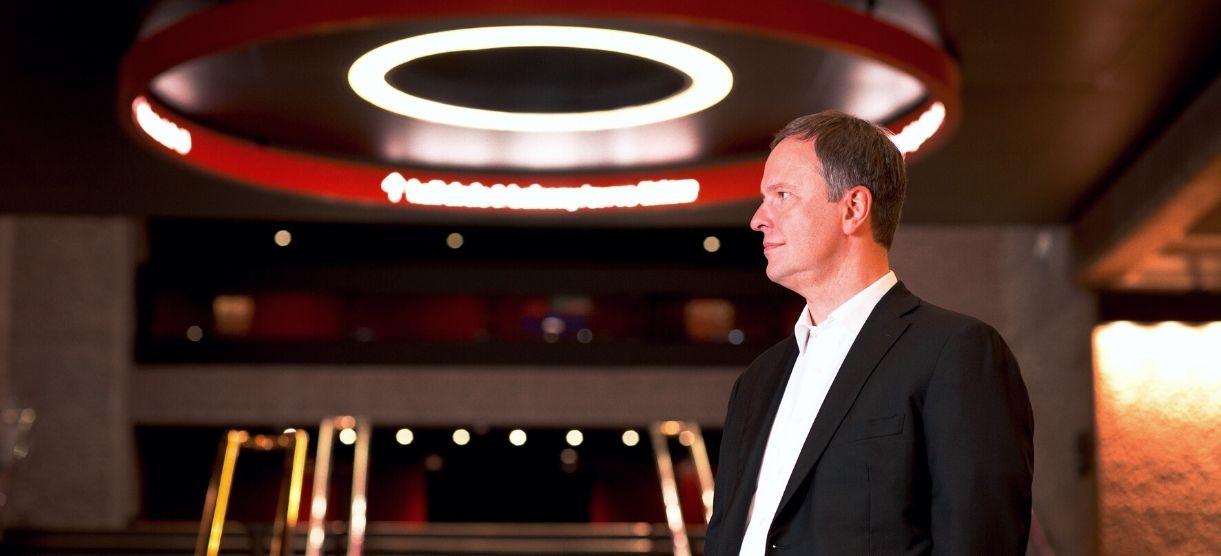
This season marks Lukáš Vasilek’s 18th year as the Principal Conductor and Artistic Director of the Prague Philharmonic Choir (PPC). Whether conducting a cappella repertoire or large-scale cantatas and oratorios with orchestra, Vasilek brings his deep understanding of choral music to every performance. Under his leadership, the PPC regularly collaborates with leading Czech and international orchestras and conductors.
Vasilek has received particular recognition for his outstanding interpretations of the great choral works of Mahler, Dvořák, and Janáček. Notable highlights include Benjamin Britten’s War Requiem, Francis Poulenc’s Stabat Mater, and Arthur Honegger’s Jeanne d’Arc au bûcher. He is also known for his adventurous programming, incorporating jazz and spirituals into the PPC’s repertoire.
Lukáš Vasilek studied conducting at the Academy of Performing Arts in Prague and musicology at Charles University. He occasionally returns to his orchestral conducting roots, working closely with the Prague Philharmonia on their choral concert cycle in collaboration with the PPC, a partnership now in its fourth year. He has also conducted musicians of the Czech Philharmonic and the Kyiv Symphony Orchestra.
Vasilek’s first experience with choral singing came as a member of the Boni Pueri boys’ choir. He later served as choirmaster of the Foerster Chamber Choir and the Prague National Theatre Choir. In 2022, he was a guest conductor for the French ensemble Accentus. In addition to his work with the PPC, he is the founder and conductor of the vocal ensemble Martinů Voices, established in 2010, focusing on chamber choral music from the 19th to 21st centuries. Until recently, he also taught choral conducting at the Academy of Performing Arts.
Lukáš Vasilek’s choral and orchestral work is featured on numerous recordings for Decca Classics and Supraphon. His recent recordings of Bohuslav Martinů’s choral works have earned international acclaim, winning awards from Gramophone, BBC Music Magazine, and Diapason.
source: Pražský filharmonický sbor
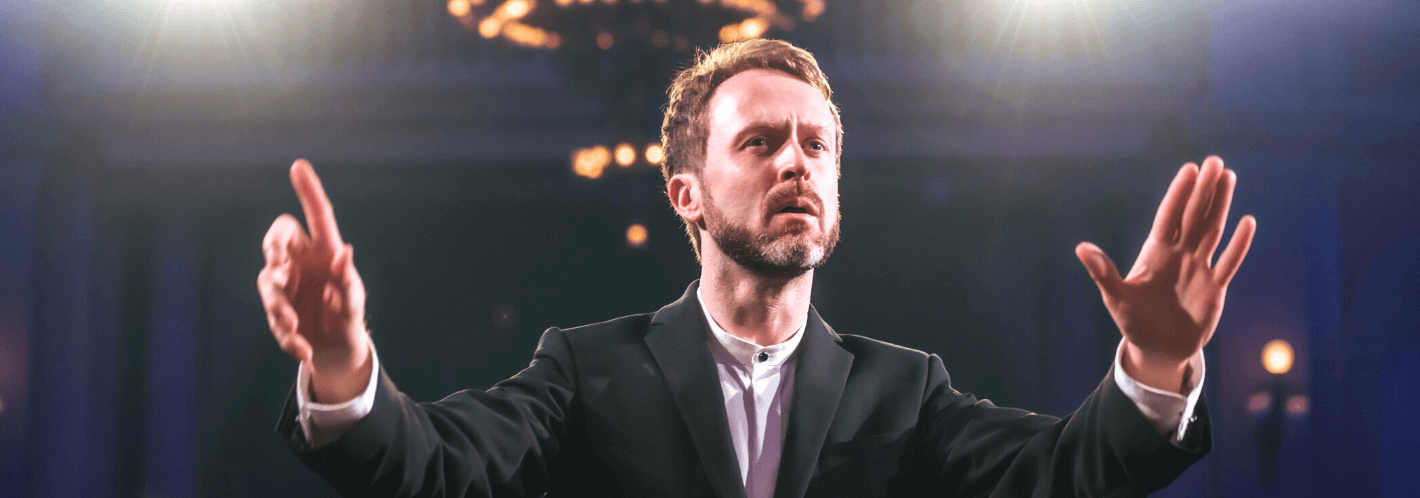
“The gleaming steel of Anu Komsi’s soprano cut through all of it, fearlessly communicative and utterly compelling, from whispered bottom of her voice to its stratospheric top.” (The Guardian, November 2020)
One of Finland’s foremost international singers, Anu Komsi’s versatility, technical skill and wide-ranging repertoire have earned her critical acclaim worldwide. Throughout her eminent career, she has worked with distinguished directors such as Pierre Audi, Barrie Kosky, Christoph Loy, Juho Kuosmanen and Lydia Steier, and leading conductors including Sir Roger Norrington, Sakari Oramo, Esa-Pekka Salonen, Alan Gilbert, Franz Welser-Möst, Peter Eötvös, Hannu Lintu, Andris Nelsons, Nicholas Collon, Santtu-Matias Rouvali and Dalia Stasevska.
2022/23 season highlights include Komsi’s return to Finnish National Opera as Queen of the Night Die Zauberflöte (which she also performs later in the season for Savonlinna Opera) and Mother-in-Law Innocence, Lindberg’s Accused with Gürzenich-Orchester Köln, the world premiere of Jukka Tiensuu’s Double Concerto for Violin and Soprano with Minna Pensola and Tapiola Sinfonietta, Strauss’ Four Last Songs with the Latvian National Symphony Orchestra and performances of Saariaho’s Saarikoski Songs with the Finnish Radio Symphony Orchestra and BBC Symphony Orchestra under Sakari Oramo. She also appears in concert with Iceland Symphony Orchestra and the Helsinki Philharmonic.
Komsi has worked with many of the major opera companies and festivals around the world, including Opéra National de Paris, Lucerne and Salzburg Festivals and La Scala Milan, and important orchestras such as the Wiener Philharmoniker, Berliner Philharmoniker, Orchestre de Paris, BBC Symphony Orchestra and the New York Philharmonic to name a few. Prominent engagements from the last seasons include Eva in Stockhausen’s Donnerstag aus Licht for Theater Basel (Komsi is still the only singer to have performed the role through its entire 6-hour duration); Catherine in Meyerbeer’s L'étoile du Nord for Kokkola Opera; Soprano in Sir George Benjamin’s Into The Little Hill, which she has sung on over fifty occasions across Europe and the US, most recently with Ensemble Modern at venues including Elbphilharmonie Hamburg and Wigmore Hall; Sibelius’ Luonnotar with the Royal Stockholm Philharmonic; Esa-Pekka Salonen’s Wing on Wing with the NDR Elbphilharmonie under Alan Gilbert; her Boston Symphony Orchestra debut with the orchestral version of Saariaho’s Saarikoski Songs under Andris Nelsons; and Kurtág’s Kafka Fragments, which has been in Komsi’s repertoire for over thirty years, most recently performed at Kissinger Sommer Festival and CNDM Madrid. She has made many recordings, including Langaard’s Symphony No.2 (Wiener Philharmoniker/Sakari Oramo) and Saariaho’s Leino Songs (Finnish Radio Symphony Orchestra/Sakari Oramo), which both garnered a Gramophone Award.
Founder, Artistic Director and later Managing Director of the West Coast Kokkola Opera Company for fourteen seasons, Komsi oversaw the Kokkola Opera summer festival which produced 25 full-scale opera productions, as well as over 100 concerts and events. A champion of new repertoire for the soprano voice, Komsi has commissioned and premiered a vast range of works, including Kaija Saariaho’s Saarikoski Songs; Christian Mason’s Man Made and Unsuk Chin’s Cantatrix Sopranica. She was awarded the Madetoja Prize by The Finnish Composers’ Society in 2020, and in 2021 was the recipient of the prestigious Erik Bergman Prize for her special achievements in performing and commissioning new vocal repertoire internationally.

Born in Chile, Christian Senn has been living in Italy since his youth. After taking a Master’s degree in Biology, he was admitted to the Academy for young singers at the Teatro alla Scala studying with Leyla Gencer, Luigi Alva and Vincenzo Manno.
He has collaborated with conductors such as Riccardo Muti, Riccardo Chailly, Antonio Pappano, Maurizio Benini, Maurizio Barbacini, Carlo Rizzi, Giovanni Antonini, Ottavio Dantone, Fabio Biondi, Roberto Rizzi Brignoli, David Parry, Rinaldo Alessandrini, Ton Koopman in many of the most renowned opera houses and venues around the word including La Scala, Theater an der Wien, Wiener Konzerthaus, Théâtre du Châtelet and Théâtre des Champs-Elysées in Paris, Palau de la Música in Valencia, Teatro Regio Torino, Teatro del Maggio Musicale, La Fenice, Municipal Theatre of Santiago.
Christian is one of the most sought-after baritones for Bel Canto repertoire in Italy and abroad, performing numerous opera roles by Rossini, such as the title role in Il Barbiere di Siviglia in Berlin, Tel Aviv, Milan, Venice, Turin, Florence, Palermo, Verona; Dandini (La Cenerentola) at the Israeli Opera Tel Aviv, Florence Opera, Teatro Petruzzelli Bari and Grange Festival; Taddeo (L’Italiana in Algeri) at Teatro Regio Torino, Versailles Royal Opera and Paris Théâtre des Champs-Elysées; Filiberto (Il Signor Bruschino), Germano (La Scala di seta) and Don Parmenione (L’Occasione fa il ladro) for the Théâtre des Champs-Elysées. In the Donizetti repertoire he has been heard as Enrico (Lucia di Lammermoor) in Bergamo, Bari and Santiago de Chile; Belcore (L’Elisir d’amore) in Bologna; Biscroma Strappaviscere (Viva la Mamma) and Malatesta (Don Pasquale) both at La Scala. Christian debuted at the Opéra National de Paris with the role of Malatesta in a production conducted by Michele Mariotti and staged by Damiano Michieletto.
Mozart singer of the first order, Christian sang the title role in Don Giovanni in Florence and Santiago de Chile. He appeared as Count Almaviva (Le Nozze di Figaro) in Milan, Naples and Potsdam; Papageno (Die Zauberflöte) in Montpellier, Turin, Verona and Florence; Guglielmo (Così fan tutte) in Milan, Verona, Bergamo, Santiago de Chile. Among his Vivaldi roles are Astolfo in Orlando furioso with Jean-Christophe Spinosi at the Théâtre des Champs-Elysées and the title role in Bajazet he has performed in major European capitals and in Japan with Europa Galante led by Fabio Biondi. Encounters with Handel embrace Pallante (Agrippina) under René Jacobs at the Berlin Staatsoper; for La Scala he took the stage as Leone (Tamerlano) alongside Placido Domingo and as Achilla (Giulio Cesare) in a Giovanni Antonini/Robert Carsen production. Christian also performed the title role in Porpora’s Polifemo at the Teater an der Wien.
Among his recent career highlights are Bach’s St Matthew Passion with Alessandro De Marchi at Theater Basel and at the Stresa Festival, and Beethoven’s 9th Symphony alongside Sakari Oramo/Wiener Symphoniker for the Vienna Konzerthaus.
For Naïve, Christian Senn has recorded a DVD with Rossini’s Pietra del paragone filmed at the Paris Théâtre du Châtelet, as well as two Vivaldi CDs, Tito Manlio and Dorilla in Tempe. His solo album “Bach - The Solo Cantatas for Bass” he recorded with La Barocca and Ruben Jais for the Glossa label, achieved great critical acclaim.
Recent and forthcoming engagements include Gounod’s Roméo et Juliette (Mercutio) at Teatro Petruzelli Bari, Cimarosa’s Matrimonio segreto (Count Robinson) under Attilio Cremonesi at the Potsdamer Winteroper and Mozart’s Così fan tutte (Alfonso) at The Grange Festival.
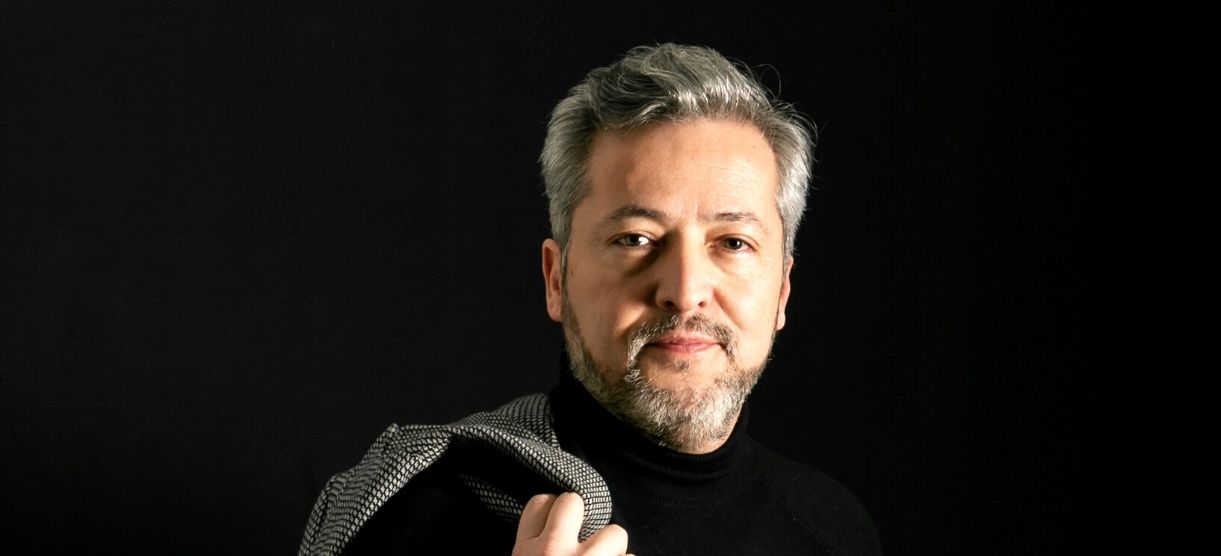
The Rudolfinum is one of the most important Neo-Renaissance edifices in the Czech Republic. In its conception as a multi-purpose cultural centre it was quite unique in Europe at the time of its construction. Based on a joint design by two outstanding Czech architects, Josef Zítek and Josef Schultz, a magnificent building was erected serving for concerts, as a gallery, and as a museum. The grand opening on 7 February 1885 was attended by Crown Prince Rudolph of Austria, in whose honour the structure was named. In 1896 the very first concert of the Czech Philharmonic Orchestra took place in the Rudolfinum's main concert hall, under the baton of the composer Antonín Dvořák whose name was later bestowed on the hall.