Antonín Dvořák: Concerto for Violoncello and Orchestra in B minor, Op. 104, B. 191
Antonín Dvořák: Symphony No. 9 in E minor, Op. 95, B. 178, 'From the New World'
The Cello Concerto in B Minor and the New World Symphony are emblematic works by Antonín Dvořák, and they also delineate the boundaries of the nearly three-year period of his stay in the USA. Standing at the beginning of the period is the New World Symphony – the first composition that Dvořák completed in America. In it, there is an outpouring of the intoxicating stimuli that were affecting him in the New World. The spirit of the songs of the African Americans and Native Americans breathed a new atmosphere into the master’s music, and this manifested itself through an extraordinarily balanced combination of lyricism with surges of boundless energy. The Cello Concerto in B Minor, on the other hand, is the work with which Dvořák bade farewell to America at the end of his stay. Although his initial inspiration was a cello concerto by the American composer Victor Herbert, the work that Dvořák created is original and filled with deep melancholy and with longing for his friends and family in Bohemia. The cello employs all of the colours of its baritone register to express the manly sorrow of a person whose desire for his homeland shuns both sentimentality and passive resignation.
Opening the festival will be the Czech Philharmonic, its chief conductor Semyon Bychkov, and the cellist Václav Petr.
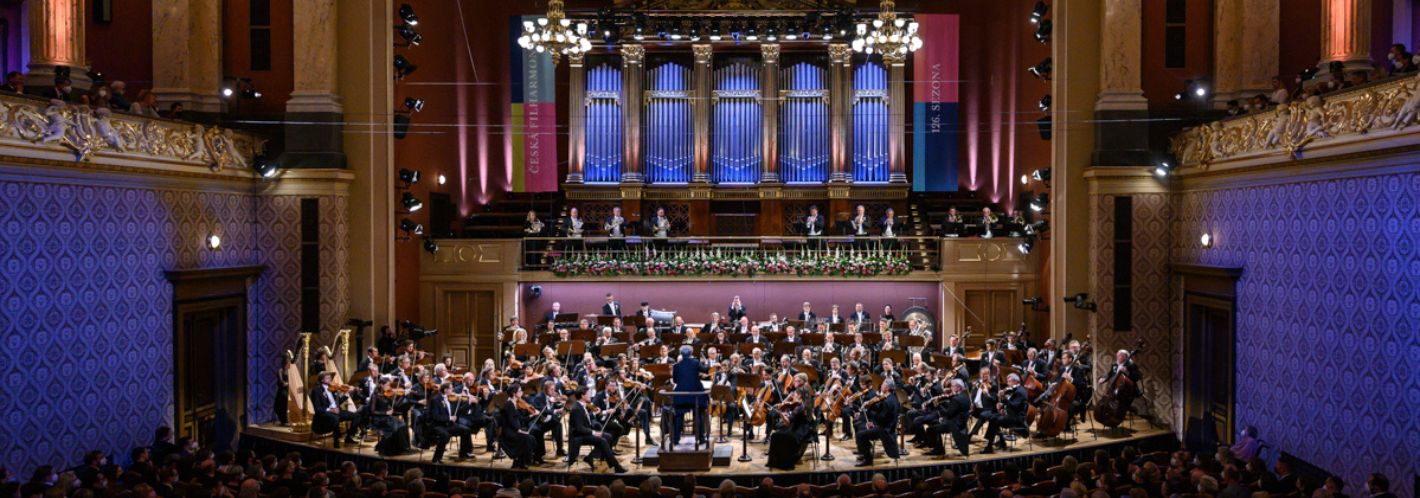
Named Gramophone’s Orchestra of the Year in 2024, the Czech Philharmonic is recognised as one of the world’s leading orchestras and remains the Czech Republic’s key cultural ambassador. Now in its 131st season, the orchestra combines a deep-rooted musical tradition with an international artistic outlook, expanding its profile through tours, residencies and recordings.
During the 2024 Year of Czech Music, the Czech Philharmonic and its Chief Conductor and Music Director Semyon Bychkov gave a three-day residency at New York’s Carnegie Hall. That same year saw the release of their recording of Smetana’s Má vlast (My Country), which went onto win the 2025 BBC Music Magazine Orchestral Award. In addition to Czech music, the orchestra’s long-standing relationship with composers such as Brahms, Tchaikovsky and Mahler has resulted in a series of benchmark recordings, including The Tchaikovsky Project (2019) and the first new cycle of Mahler symphonies in more than 40 years, released in 2026. The next release with Bychkov features Shostakovich’s Symphony Nos. 5 and 7.
The 131st season opens in Prague with Shostakovich’s Violin Concerto No. 1 featuring Artist-in-Residence Janine Jansen, alongside Dvořák’s Symphony No. 7. Touring highlights include the orchestra’s first visit in over 50 years to Sweden and Finland, a return to Lucerne Festival, and residencies in London, Vienna and Hamburg. At home, the Czech Philharmonic performs at the Rudolfinum in Prague and at leading Czech festivals including Dvořák Prague, Prague Spring, Smetana Litomyšl, and for the first time, Janáček Brno.
Repertoire this season with Bychkov includes Má vlast; works by Mussorgsky, Ravel, Adams, Strauss, Glanert and Britten; and a major focus on Rachmaninoff, presented both in Prague and on tour. Beethoven’s Ninth Symphony, performed with the Prague Philharmonic Choir, will mark the 200th anniversary of the composer’s death in 2027.
Principal Guest Conductors Simon Rattle and Jakub Hrůša both return this season. With Rattle, the orchestra presents music by Barber, Shostakovich, Debussy, Szymanowski and the Czech premiere of Composer-in-Residence Thomas Adès’s Aquifer. With Hrůša – appointed last year as the orchestra’s next Chief Conductor and Music Director (Renáta Kellnerová Chair) from the 2028/2029 season – they perform works by Strauss, Beethoven, Suk and a world premiere by Martin Smolka.
Guest conductors this season include Vasily Petrenko, Herbert Blomstedt, Elim Chan, Maxim Emilyanchev, and Daniel Harding, who closes the subscription season with the Accademia Nazionale di Santa Cecilia. Guest soloists include Yuja Wang, Behzod Abduraimov, Mao Fujita, Yunchan Lim, Seong-Jin Cho, Karen Gomyo, Radek Baborák and Kirill Gerstein.
The Czech Philharmonic’s distinguished history reflects the Czech Republic’s complex political past and its central European location. An early champion of the music of Martinů and Janáček, the Czech Philharmonic gave its first concert in 1896 with an all-Dvořák programme conducted by the composer itself.
Alongside its commitment to championing Czech composers, the orchestra’s belief in the power of music to transform lives remains a defining principle. The Czech Philharmonic Youth Orchestra, Orchestral Academy, and Jiří Bělohlávek Prize for young musicians, form part of the orchestra’s education strategy which engages with more than 400 schools. An inspirational music and song programme led by Ida Kelarová continues to support social inclusion by giving voice to Romany communities through music.
source: Česká filharmonie
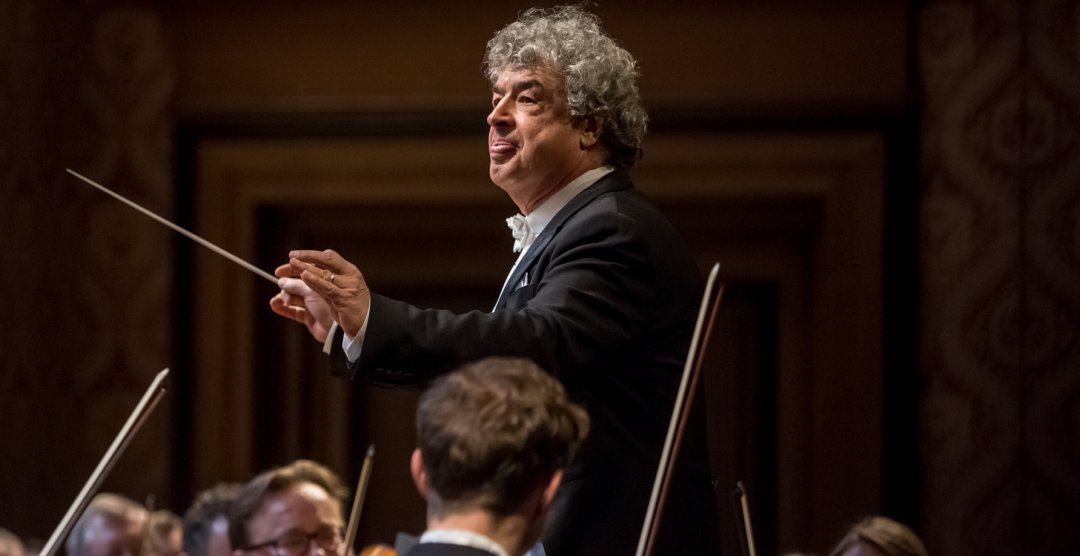
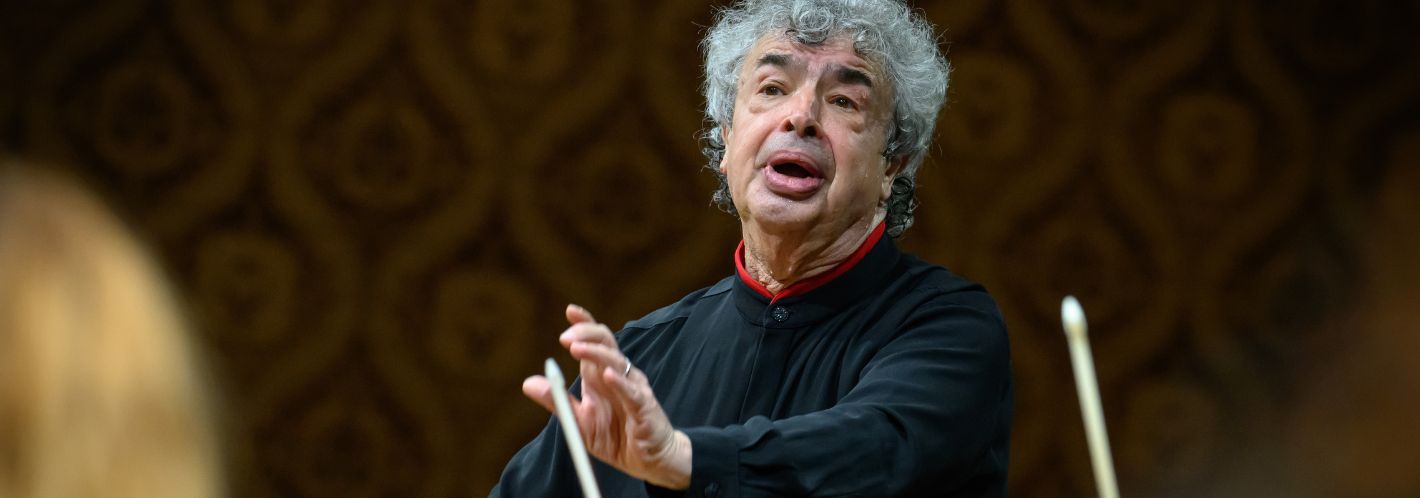
Semyon Bychkov marked the Czech Philharmonic’s 130th anniversary in 2026 with extensive tours of Asia and Europe and, the release by PENTATONE of Mahler’s Nine Symphonies. In 2026/27 season, he returns to the repertoire of his formative years, and alongside Czech masters will conduct works by Shostakovich, Rachmaninov and Mussorgsky: “What amazes me is how strongly Shostakovich’s existential music resonates in a world which seems, outwardly, very different from the one in which he was fighting for his life both as a human being and a composer. But maybe we’re all faced with a struggle to be true to ourselves against odds of various kinds, even insidious ideologies which hide their true nature.”
Born in Leningrad in 1952, Bychkov emigrated to the United States in 1975 and, since the mid-1980's has lived in Europe. He enjoyed success as Music Director of the Grand Rapids Symphony Orchestra and the Buffalo Philharmonic and, following a series of high-profile cancellations leading to engagements with the New York and Berlin Philharmonic orchestras and the Concertgebouw, returned to St Petersburg in 1989 as the Philharmonic’s Principal Guest Conductor. He was named Music Director of the Orchestre de Paris (1989); Chief Conductor of the WDR Symphony Orchestra Cologne (1997); and Chief Conductor of the Dresden Semperoper (1998). From August 2026, Bychkov will be Music Director Designate of the Paris Opera, assuming the title of Music Director in 2028.
Bychkov conducts in all the major opera houses including La Scala, Milan, London’s Royal Opera House and New York’s Metropolitan Opera. In Europe he is frequent guest of the Concertgebouw, Munich, Berlin and Vienna Philharmonics, the Leipzig Gewandhaus, the Orchestre National de France and the Accademia Nazionale di Santa Cecilia; while in the US, he conducts the New York Philharmonic, Chicago Symphony, Los Angeles Symphony, Philadelphia and Cleveland Orchestras. The warmth of Bychkov’s relationships is reflected in honorary titles at the Royal Academy of Music and the BBC Symphony Orchestra, who he regularly conducts at the BBC Proms.
Semyon Bychkov was named Conductor of the Year by the International Opera Awards (2015) and, by Musical America (2022).
source: Česká filharmonie
photo © Petra Hajská
Already in his childhood, the cellist Václav Petr won a number of prizes at international music competitions including Concertino Praga, the Bohuslav Martinů Foundation Competition, Prague Junior Note, Talents for Europe, and the International Cello Competition in Liezen, Austria. He is a graduate of the Academy of Performing Arts in Prague, and he furthered his education at the Universität der Künste in Berlin. He has also taken part at many masterclasses in Kronberg, Hamburg, Vaduz, and Baden-Baden, and he has participated at the European Academy of Music in Bonn. He has been appearing as a soloist for twenty years with important Czech and foreign orchestras. Since 2013 he has been the principal cellist of the Czech Philharmonic. He also performs chamber music: since 2009 he has been a member of the Josef Suk Piano Quartet, with which he won first prize in a competition of chamber ensembles in Val Tidone, Italy, and at one of the most prestigious competitions for chamber ensembles with piano, Premio Trio di Trieste. He plays a cello from the workshop of the master instrument maker Giovanni Battista Guadagnini (1757).

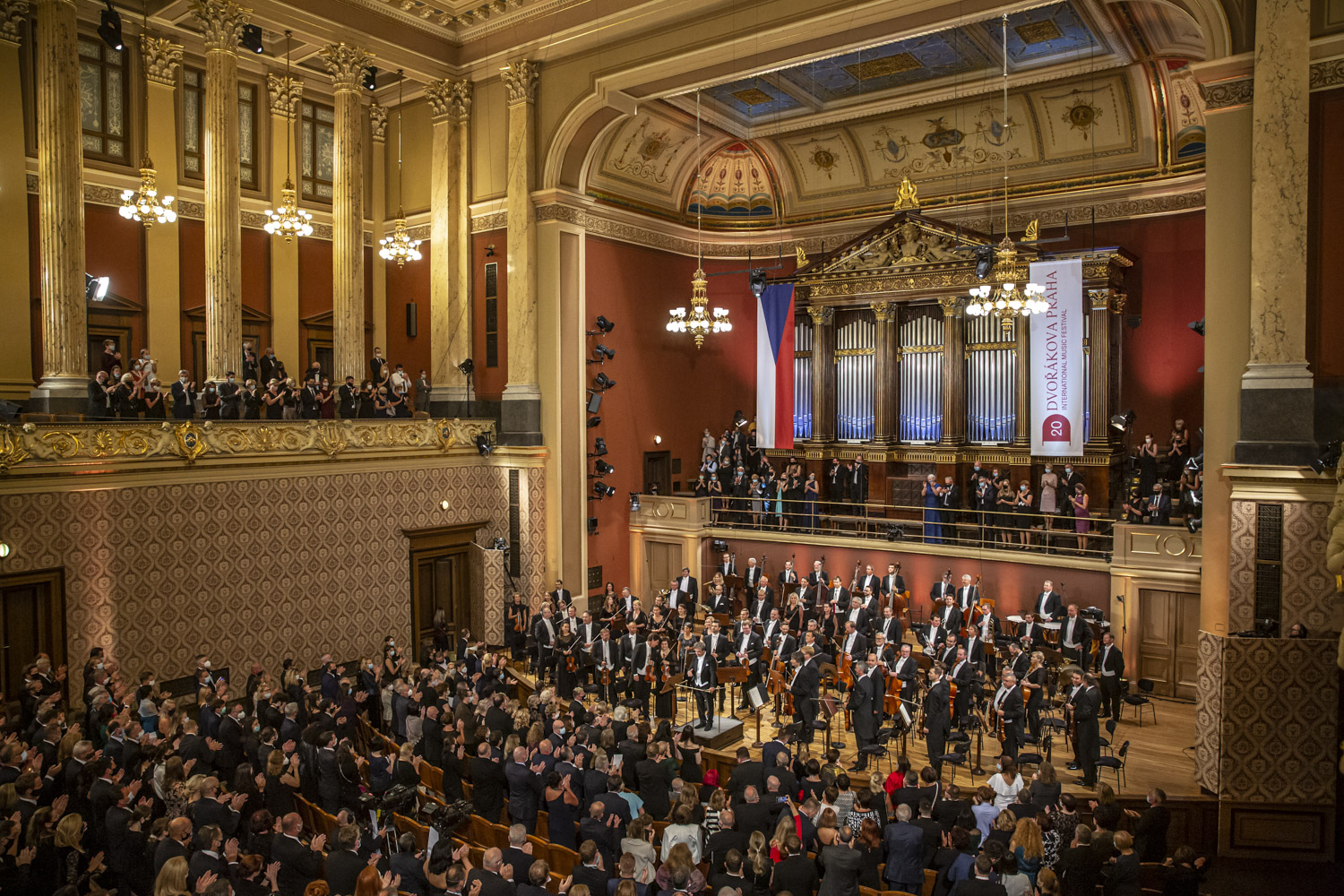
The Rudolfinum is one of the most important Neo-Renaissance edifices in the Czech Republic. In its conception as a multi-purpose cultural centre it was quite unique in Europe at the time of its construction. Based on a joint design by two outstanding Czech architects, Josef Zítek and Josef Schultz, a magnificent building was erected serving for concerts, as a gallery, and as a museum. The grand opening on 7 February 1885 was attended by Crown Prince Rudolph of Austria, in whose honour the structure was named. In 1896 the very first concert of the Czech Philharmonic Orchestra took place in the Rudolfinum's main concert hall, under the baton of the composer Antonín Dvořák whose name was later bestowed on the hall.