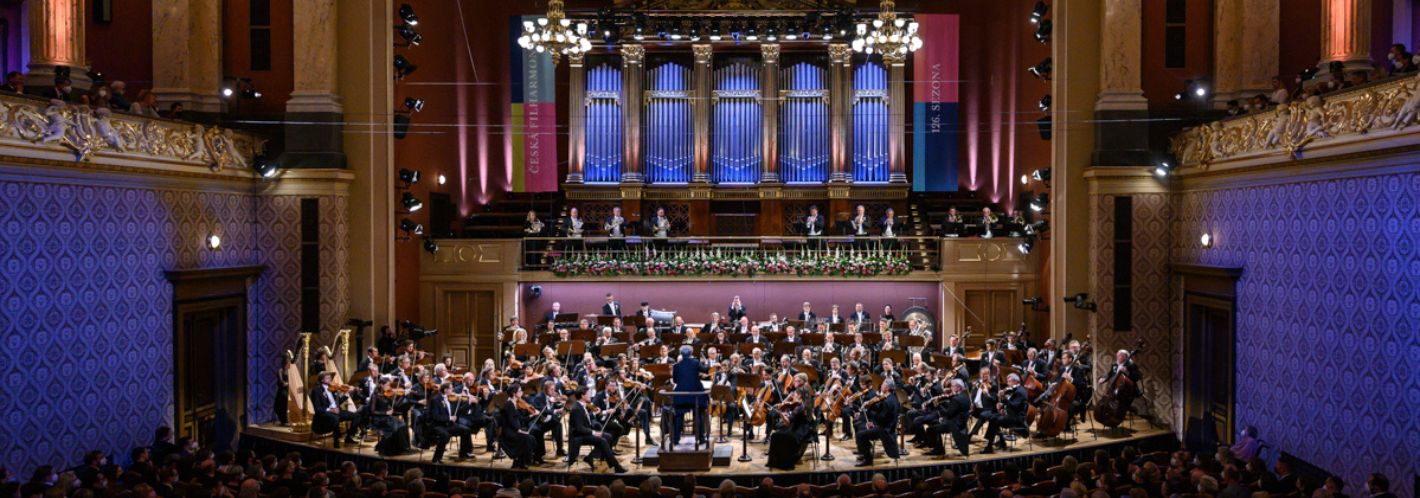
Robert Schumann: Violin Concerto in D Minor, WoO 23
Hector Berlioz: Symphonie fantastique, Op. 14
Not only hobbit Bilbo had to go ‘there and back again’—Berlioz and Schumann take us on a similarly winding journey of musical discovery. Both composers were revolutionaries, stirring audiences with their music and words. Berlioz’s imposing presence—with his towering figure and fiery red hair—was unforgettable, while Schumann, in his Violin Concerto, looked to the classical past. By contrast, Berlioz’s Symphonie fantastique hurtled boldly into the future.
Norwegian violinist Vilde Frang’s urgent, commanding style will shine in Schumann’s concerto, her voice clear even amid a full orchestral texture. Berlioz’s work offers a whirlwind of emotions driven by a single musical idea. The composer himself described it as the opium-laced visions of a lovesick artist who encounters his beloved through dreams, a ball, the countryside, a march to the scaffold, and a witches’ sabbath. Even those unaware of its programme will find themselves swept away.
Named Gramophone’s Orchestra of the Year in 2024, the Czech Philharmonic is recognised as one of the world’s leading orchestras and remains the Czech Republic’s key cultural ambassador. Now in its 131st season, the orchestra combines a deep-rooted musical tradition with an international artistic outlook, expanding its profile through tours, residencies and recordings.
During the 2024 Year of Czech Music, the Czech Philharmonic and its Chief Conductor and Music Director Semyon Bychkov gave a three-day residency at New York’s Carnegie Hall. That same year saw the release of their recording of Smetana’s Má vlast (My Country), which went onto win the 2025 BBC Music Magazine Orchestral Award. In addition to Czech music, the orchestra’s long-standing relationship with composers such as Brahms, Tchaikovsky and Mahler has resulted in a series of benchmark recordings, including The Tchaikovsky Project (2019) and the first new cycle of Mahler symphonies in more than 40 years, released in 2026. The next release with Bychkov features Shostakovich’s Symphony Nos. 5 and 7.
The 131st season opens in Prague with Shostakovich’s Violin Concerto No. 1 featuring Artist-in-Residence Janine Jansen, alongside Dvořák’s Symphony No. 7. Touring highlights include the orchestra’s first visit in over 50 years to Sweden and Finland, a return to Lucerne Festival, and residencies in London, Vienna and Hamburg. At home, the Czech Philharmonic performs at the Rudolfinum in Prague and at leading Czech festivals including Dvořák Prague, Prague Spring, Smetana Litomyšl, and for the first time, Janáček Brno.
Repertoire this season with Bychkov includes Má vlast; works by Mussorgsky, Ravel, Adams, Strauss, Glanert and Britten; and a major focus on Rachmaninoff, presented both in Prague and on tour. Beethoven’s Ninth Symphony, performed with the Prague Philharmonic Choir, will mark the 200th anniversary of the composer’s death in 2027.
Principal Guest Conductors Simon Rattle and Jakub Hrůša both return this season. With Rattle, the orchestra presents music by Barber, Shostakovich, Debussy, Szymanowski and the Czech premiere of Composer-in-Residence Thomas Adès’s Aquifer. With Hrůša – appointed last year as the orchestra’s next Chief Conductor and Music Director (Renáta Kellnerová Chair) from the 2028/2029 season – they perform works by Strauss, Beethoven, Suk and a world premiere by Martin Smolka.
Guest conductors this season include Vasily Petrenko, Herbert Blomstedt, Elim Chan, Maxim Emilyanchev, and Daniel Harding, who closes the subscription season with the Accademia Nazionale di Santa Cecilia. Guest soloists include Yuja Wang, Behzod Abduraimov, Mao Fujita, Yunchan Lim, Seong-Jin Cho, Karen Gomyo, Radek Baborák and Kirill Gerstein.
The Czech Philharmonic’s distinguished history reflects the Czech Republic’s complex political past and its central European location. An early champion of the music of Martinů and Janáček, the Czech Philharmonic gave its first concert in 1896 with an all-Dvořák programme conducted by the composer itself.
Alongside its commitment to championing Czech composers, the orchestra’s belief in the power of music to transform lives remains a defining principle. The Czech Philharmonic Youth Orchestra, Orchestral Academy, and Jiří Bělohlávek Prize for young musicians, form part of the orchestra’s education strategy which engages with more than 400 schools. An inspirational music and song programme led by Ida Kelarová continues to support social inclusion by giving voice to Romany communities through music.
source: Česká filharmonie
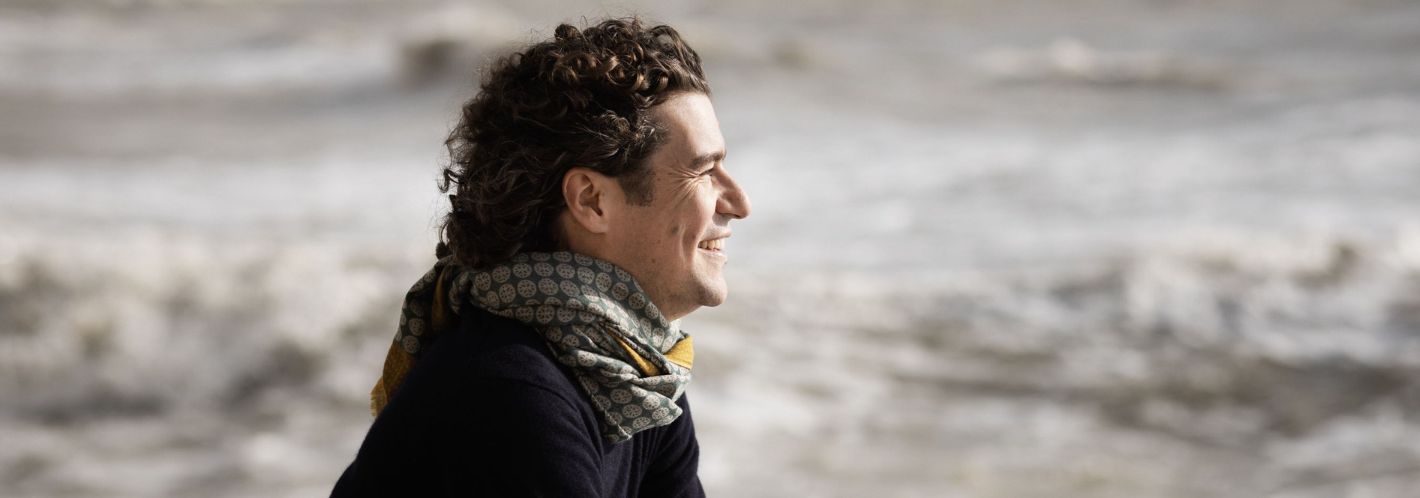
Robin Ticciati OBE has been music director of the Deutsches Symphonie-Orchester Berlin since 2017 and music director of Glyndebourne Festival Opera since 2014. He was principal conductor of the Scottish Chamber Orchestra from 2009-18.
He is a regular guest with the Symphonieorchester des Bayerischen Rundfunks, London Philharmonic Orchestra, Budapest Festival Orchestra and the Chamber Orchestra of Europe. In recent years, he has also appeared with the Wiener Philharmoniker, London Symphony Orchestra, Czech Philharmonic, Swedish Radio Symphony Orchestra, Royal Concertgebouw Orchestra, Orchestre National de France, Staatskapelle Dresden and the Gewandhausorchester Leipzig. In the US, he has appeared with the Cleveland Orchestra, Philadelphia Orchestra, Los Angeles Philharmonic and the San Francisco Symphony Orchestra.
Since becoming music director at Glyndebourne, he has led critically acclaimed new productions of La damnation de Faust, Pelléas et Mélisande, Der Rosenkavalier, Die Entführung aus dem Serail, La Clemenza di Tito, Carmelites, Katya Kabanova, Smyth’s The Wreckers, and a double bill of Poulenc’s La voix humaine & Les Mamelles de Tirésias.
He has conducted Peter Grimes at Teatro alla Scala, Milan, The Marriage of Figaro at the Salzburg Festival, and Eugene Onegin at both the Royal Opera House, Covent Garden, and the Metropolitan Opera, New York.
His highly acclaimed discography includes Berlioz with the Swedish Radio Symphony Orchestra; Haydn, Schumann, Berlioz and Brahms with the Scottish Chamber Orchestra; Dvořák, Bruckner and Brahms with the Bamberg Symphony Orchestra; and Bruckner, Debussy, Duruflé, Duparc, Fauré, Ravel, Rachmaninov and Strauss with the Deutsches Symphonie-Orchester Berlin.
In season 2023/24, Robin Ticciati made his debuts with the Berliner Philharmoniker, Oslo Philharmonic, and at the Deutsche Staatsoper Berlin, where he conducted its new production of Rusalka. He returned to the London Philharmonic Orchestra, Wiener Symphoniker, Symphonieorchester des Bayerischen Rundfunks, and the Chamber Orchestra of Europe. At Glyndebourne Festival Opera, he conducted a new production of Carmen and a revival of Tristan und Isolde.
Born in London, Robin Ticciati is a violinist, pianist and percussionist by training. He was a member of the National Youth Orchestra of Great Britain when, aged fifteen, he turned to conducting under the guidance of Sir Colin Davis and Sir Simon Rattle. He holds the position of ‘Sir Colin Davis Fellow of Conducting’ at the Royal Academy of Music. Robin Ticciati was awarded an OBE for services to music in the Queen’s Birthday Honours (2019).
source: Askonas Holt
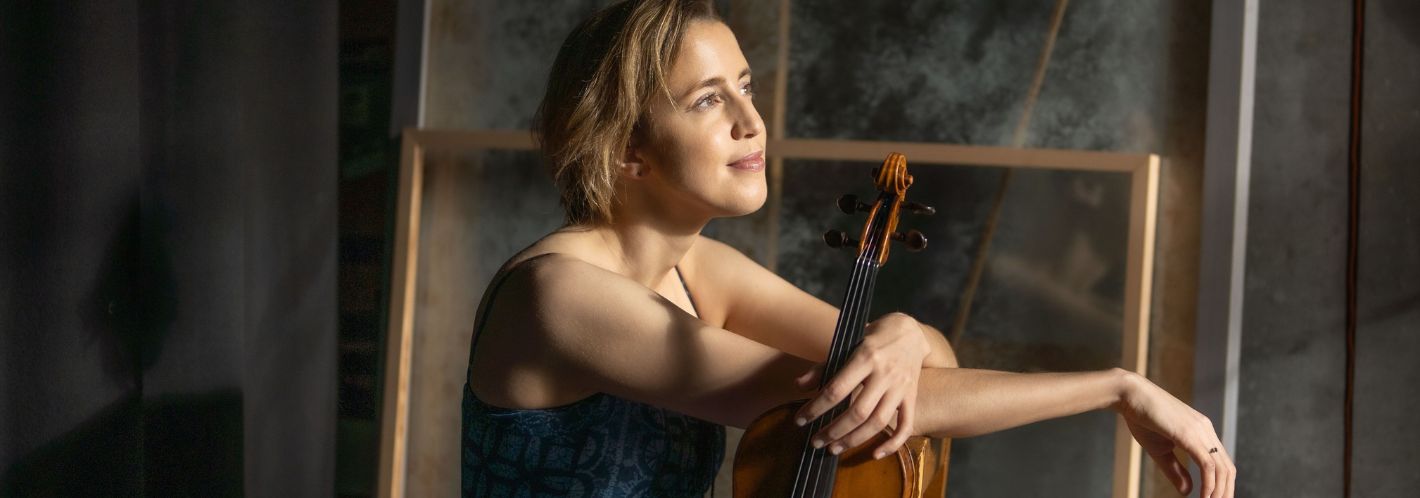
In 2012, Vilde Frang was unanimously awarded the Credit Suisse Young Artist Award, which led to her debut with the Wiener Philharmoniker under Bernard Haitink at the Lucerne Festival.
Her profound musicianship and exceptional lyricism have elevated her to one of the foremost violinists of her generation. She continues to appear regularly with the world’s leading orchestras, including the Berliner Philharmoniker, Concertgebouw Orchestra, Symphonieorchester des Bayerischen Rundfunks, London Symphony Orchestra, Chamber Orchestra of Europe, Tonhalle Orchestra Zurich, Los Angeles Philharmonic, Budapest Festival Orchestra, and Cleveland Orchestra. She has enjoyed collaborations with conductors including Sir Simon Rattle, Bernard Haitink, Herbert Blomstedt, Esa-Pekka Salonen, Mariss Jansons, Vladimir Ashkenazy, Iván Fischer, Maxim Emelyanychev, Jakub Hrůša, Vladimir Jurowski, Manfred Honeck, Teodor Currentzis, Daniel Harding, Antonio Pappano, Lahav Shani, Paavo Järvi, and Yuri Temirkanov.
Highlights of the current season include her return to the Berliner Philharmoniker with Kirill Petrenko, as well as her much-anticipated debut with the Chicago Symphony Orchestra. Vilde is also embarking on international tours with the Oslo Philharmonic Orchestra with Klaus Mäkelä, London Symphony Orchestra with Antonio Pappano, Deutsches Symphonie-Orchester Berlin with Robin Ticciati, Münchner Philharmoniker with Mirga Gražinytė-Tyla, and the London Philharmonic Orchestra with Vladimir Jurowski. She is also embarking on a Bach cycle with the Kammerorchester Basel.
A keen and prominent chamber musician, Vilde regularly appears at the Lucerne Festival, BBC Proms, Verbier Festival, Lockenhaus Festival, George Enescu Festival, Salzburg Festival, and the Prague Spring International Music Festival. She also frequently performs in recitals at Carnegie Hall, Concertgebouw, Vienna Musikverein, Philharmonie Berlin, Tonhalle Zurich, and BOZAR Brussels, as well as in North America as part of the Vancouver Recital Series, Boston Celebrity Series, and San Francisco Performances. Vilde returns to the Wigmore Hall as artist-in-residence, where she will join forces with the early music ensemble Arcangelo. Later in the season, she will take part in chamber music performances with her close collaborators Lawrence Power, Valeriy Sokolov, Denis Kozhukhin, and Maximilian Hornung.
Vilde Frang is an exclusive Warner Classics artist, and her recordings have received numerous awards, including the Edison Klassiek Award, Diapason d’Or (Diapason Magazine), Deutsche Schallplattenpreis, Grand Prix du Disque, and two Gramophone Awards.
Born in Norway, Vilde was engaged by Mariss Jansons at the age of twelve to debut with the Oslo Philharmonic Orchestra. She studied at the Barratt Due Institute of Music in Oslo, with Kolja Blacher at the Hochschule für Musik und Theater Hamburg and Ana Chumachenco at the Kronberg Academy.
Vilde performs on a 1734 Guarneri del Gesù, generously loaned to her by a European benefactor.
source: Askonas Holt
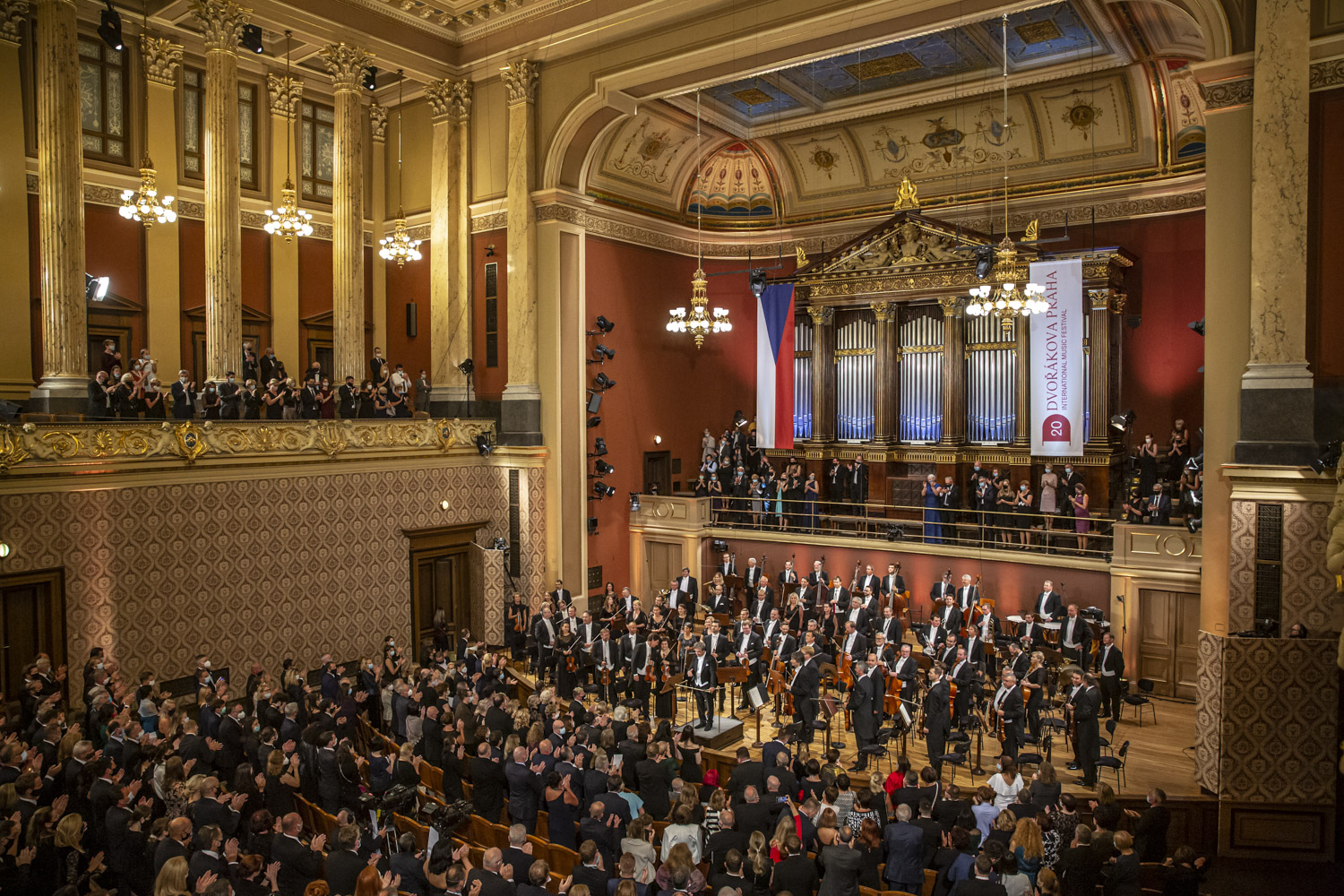
The Rudolfinum is one of the most important Neo-Renaissance edifices in the Czech Republic. In its conception as a multi-purpose cultural centre it was quite unique in Europe at the time of its construction. Based on a joint design by two outstanding Czech architects, Josef Zítek and Josef Schultz, a magnificent building was erected serving for concerts, as a gallery, and as a museum. The grand opening on 7 February 1885 was attended by Crown Prince Rudolph of Austria, in whose honour the structure was named. In 1896 the very first concert of the Czech Philharmonic Orchestra took place in the Rudolfinum's main concert hall, under the baton of the composer Antonín Dvořák whose name was later bestowed on the hall.