Dmitri Shostakovich: Violin Concerto No. 1 in A Minor, Op. 77
Ludwig van Beethoven: Symphony No. 7 in A Major, Op. 92
In this evening’s concert, a journey from the darkness of night to a celebration of dance is traced by two of history’s greatest composers. Dmitri Shostakovich spent his entire life under the totalitarian regimes of Tsarist and, primarily, Bolshevik Russia. He wrote his first violin concerto during the final post-war years of Stalinist terror. In it, the violin – as if to cope with all the traumas and injustices of that time – seems to sing an endless lament, finally letting the light of artistic honesty, truth and an indestructible sense of beauty shine dimly above it all. In contrast, Beethoven’s Seventh Symphony, which Richard Wagner called the “apotheosis of the dance”, blazes forth like living fire. Yet it is also somewhat of an inversion of Shostakovich’s work: beneath its wild, almost pagan joy, the inexorable rhythm of fate seems to emanate, marching forth through the second movement. But joy prevails, and the evening ends in music that is red-hot and spell-binding. The orchestra of the renowned Tonhalle in Zurich – which was personally inaugurated by Johannes Brahms – crowns the journey.
This concert is held under the patronage of the Embassy of Switzerland in the Czech Republic.

The concert is held under the patronage of H.E. Jana Vanaveski, Ambassador of the Republic of Estonia.

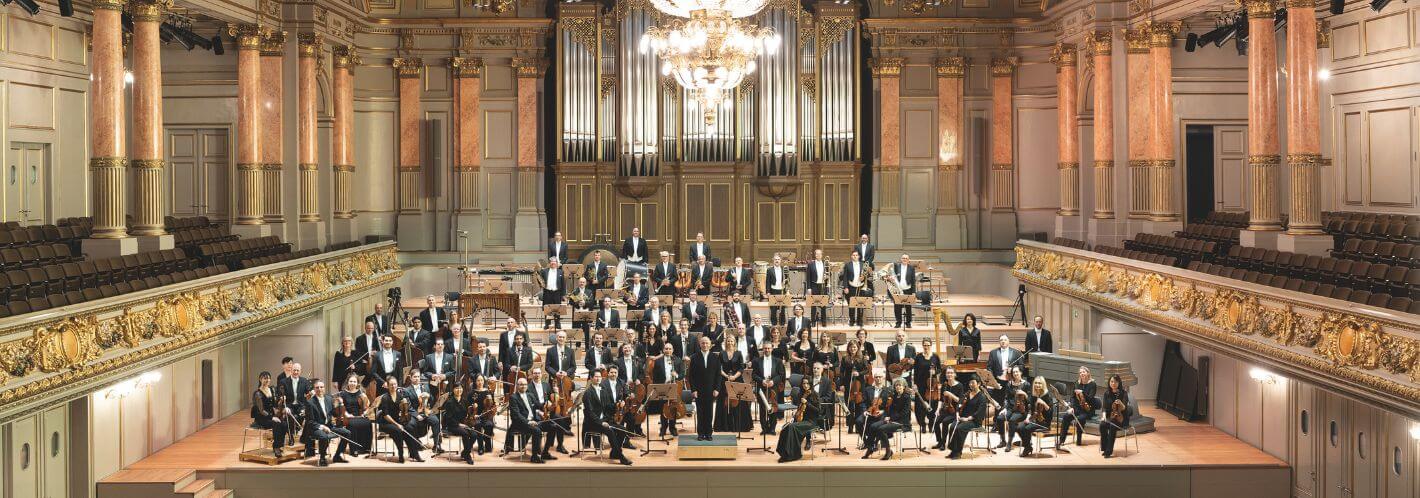
Classical music from Messiaen to Mozart: That is the passion of the Tonhalle-Orchester Zürich – and has been since 1868. When it plays with Paavo Järvi, a special energy is generated, because no concert is like the previous one. The orchestra loves the diverse stimuli it receives from its guest conductors and enjoys being challenged by internationally acclaimed soloists.
Along with its audience, the orchestra maintains a lively curiosity for unknown masterpieces and newly commissioned works. Founded by musicians from Zurich, it proclaims its musical home in its name and carries its excellent reputation around the world by means of tours and recordings.
In the Tonhalle-Orchester Zürich, 100 musicians play around fifty different programmes in over 100 concerts per season. The orchestra brings together musicians from twenty nations. Guest appearances have taken it to 100 cities in more than thirty countries. In addition to the orchestral projects, the musicians also create their own chamber music series and may be heard as soloists in a series specifically devoted to them. The Music Director Paavo Järvi is the eleventh principal conductor of the Tonhalle-Orchester Zürich; David Zinman is its conductor emeritus.
The orchestra has released more than forty recordings on CD, including complete cycles of the symphonies of Beethoven, Mahler, Brahms and Schubert. Its first recording with Paavo Järvi was devoted to orchestral works by Olivier Messiaen and was awarded the Diapason d’Or in 2019. This was followed by recordings of all of Tchaikovsky’s symphonies and other orchestral works; the first release with the Fifth Symphony was awarded the Preis der Deutschen Schallplattenkritik 2020 and the Diapason d’Or 2021. The latest CD release with works by John Adams is highly praised by the critics and has already been awarded a Diapason d'Or. Together with Paavo Järvi the orchestra recently received the Europäischer Kulturpreis 2022.
source: tonhalle-orchester.ch
photo © Gaëtan Bally
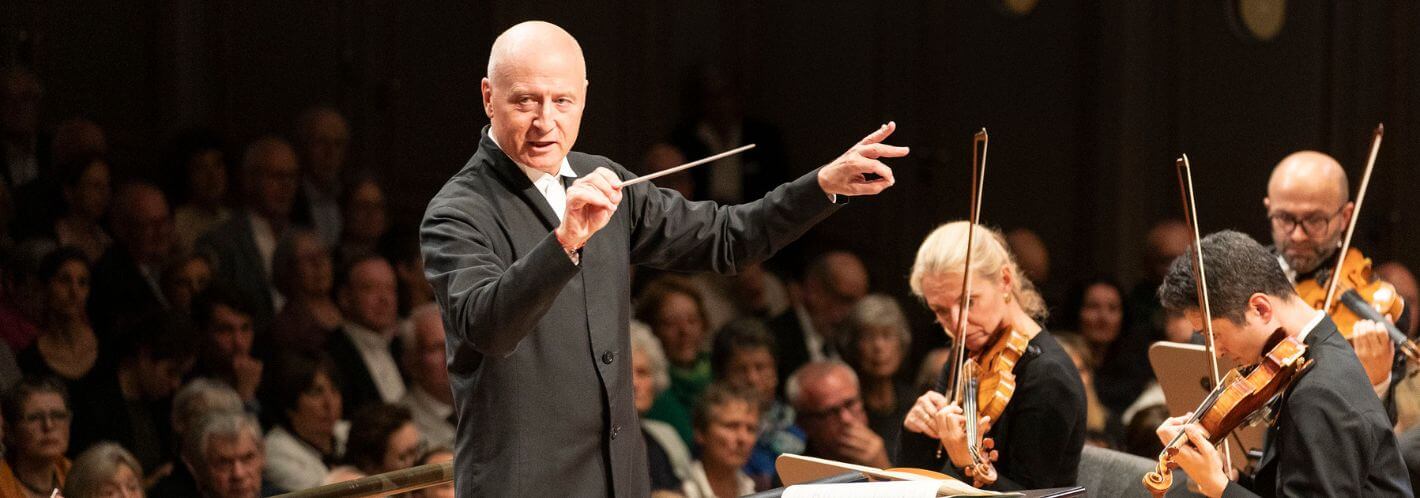
Estonian-born Grammy winner Paavo Järvi is regarded as one of the most important conductors today, working in close partnership with the greatest international orchestras. He is the Music Director of the Tonhalle-Orchester Zürich, since 2004 Artistic Director of the Deutsche Kammerphilharmonie Bremen, and the founder and Artistic Director of the Estonian Festival Orchestra.
Having last season completed his Mendelssohn cycle with the Tonhalle-Orchester Zürich, in the 2023–24 season he continues their Bruckner focus, as well as embarking on a Mahler cycle with CD recordings. Further recent releases include live recordings of the complete Tchaikovsky symphonies and newly issued orchestral works by John Adams to mark the composer’s 75th birthday.
Each season concludes with two weeks of performances and conducting masterclasses at the Pärnu Music Festival in Estonia, which Paavo Järvi founded in 2011. The success of the festival and its resident ensemble – the Estonian Festival Orchestra – has led to a number of highly prestigious invitations to the Berlin Philharmonie, the Konzerthaus in Vienna, the BBC Proms and Suntory Hall in Tokyo. Paavo Järvi is also much in demand as a guest conductor, maintaining close links with his previous orchestras all over the world.
In addition to his permanent positions, Paavo Järvi is much in demand as a guest conductor, regularly appearing with the Berlin Philharmonic, the Royal Concertgebouw Orchestra, the Philharmonia and the New York Philharmonic. He also continues to enjoy close relationships with many of the orchestras of which he was previously Music Director, including the Orchestre de Paris, the Frankfurt Radio Symphony and the NHK Symphony Orchestra.
In 2013, the Estonian President awarded him the Order of the White Star for his commitment to his country’s culture. Further prizes and accolades include a Grammy Award in 2003 for cantatas by Sibelius; in 2015, “Artist of the Year” awarded by Gramophone magazine (UK) and Diapason (France), as well as the Sibelius Medal; in 2019, “Conductor of the Year” (Opus Klassik) and the Rheingau Music Prize; and most recently, the 2022 European Cultural Prize.
source: paavojarvi.com
photo © Gaëtan Bally
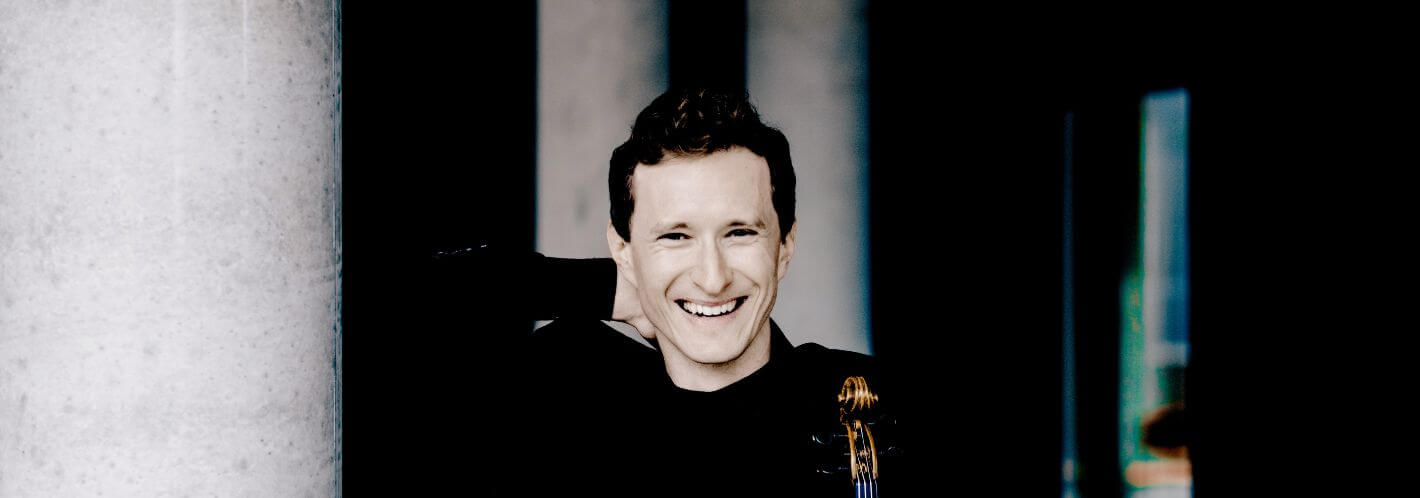
Praised for his remarkable range of colours, his confident and concentrated stage presence, his virtuosity and technical poise as well as the beauty of his tone Josef Špaček has gradually emerged as one of the leading violinists of his generation. His performances of a wide range of repertoire demonstrate his “astonishing articulation and athleticism” (The Scotsman) and “a richness and piquancy of timbre.” (The Telegraph).
Forthcoming highlights include debuts with the Pittsburgh Symphony Orchestra and Petr Popelka, London Philharmonic Orchestra and Edward Gardner, NHK Symphony Orchestra and Jakub Hrůša and Hong Kong Philharmonic Orchestra and Anja Bihlmaier, as well as returns to the Konzerthausorchester Berlin and Joanna Mallwitz, Bamberger Symphoniker and Aurel Dawidiuk, Symphoniker Hamburg and Adam Hickox, Deutsche Radio Philharmonie and Kevin John Edusei, Dutch Radio Philharmonic and Stephan Zilias, the Czech Philharmonic and Thomas Adès and George Enescu Philharmonic and Tomáš Netopil.
Recent highlights include highly successful debuts with the Chicago Symphony Orchestra and Jakub Hrůša (“his steely technique handling the angular bonhomie as surely as the passing lyrical strains. In the Andante, Špaček rendered the lovely main theme with a beguiling tenderness and sweetness of tone that recalled Suk, his illustrious predecessor.” - CCR), with the Atlanta Symphony Orchestra and Nathalie Stutzmann, the Gewandhausorchester Leipzig and Andrew Manze, the Orchestre National de Lille and Jan-Willem de Vriend, concerts with Sinfonia Varsovia and Marta Gardolińska in Warsaw and Brussels, a concerto and recital tour in China, as well as returns to the Dresdner Philharmonie and Kahchun Wong, the Berner Symphoniker and Anna Sułkowska-Migoń and the Macao Orchestra and Lio Kuokman, as well as a residency with the Residentie Orchestra The Hague with Anja Bihlmaier and Jun Märkl. He also returned to the Verbier Festival for a performance of the Barber concerto.
He equally enjoys giving recitals and playing chamber music and is a regular guest at festivals and in concert halls throughout Europe. He ist he artistic director and co-founder of the Troja chmber music festival Festival, in Prague.
With cellist Timotheos Gavriilidis-Petrin and pianist George Xiaoyuan Fu he forms the Trio Zimbalist. The trio regularly tours in the US and Europe. Their first CD release with piano trios of Weinberg, Auerbach and Dvořák received high accolades from the international press, including Gramophone Magazine’s Editor’s Choice in March 2024, describing the album as “miraculously fresh,” “imaginative,” and “inventive”.
In September 2023 Supraphon released Josef’s recording of Martinů’s Concerto for violin, piano and orchestra, violin sonata no. 3 and Five Short Pieces with pianist Miroslav Sekera and the Prague Radio Symphony Orchestra, conducted by Petr Popelka. The BBC Music Magazine commented that “Špaček and Sekera are virtuosic in the opening movement and searching in the Adagio. There’s a special piquancy in their Scherzo, and all these elements are combined in the finale, where Špaček’s violin tone has shining poise.”
Previous recordings for the Supraphon label are an album with cellist Tomáš Jamník, featuring works for violin and cello by Janáček, Martinů, Schulhoff and Klein; his highly praised recording of the violin concertos of Dvořák and Janáček, coupled with the Fantasy of Suk, with the Czech Philharmonic Orchestra conducted by Jiří Bělohlávek and a recital disc with works for violin and piano by Smetana, Janáček and Prokofiev with pianist Miroslav Sekera.
Josef Špaček studied with Itzhak Perlman at The Juilliard School in New York, Ida Kavafian and Jaime Laredo at the Curtis Institute of Music in Philadelphia, and with Jaroslav Foltýn at the Prague Conservatory.
After having served as concertmaster of the Czech Philharmonic Orchestra for nine seasons until the end of the 2019/20, he has devoted himself exclusively to his solo career. The orchestra has named him the Associate Artist in Residence.
Josef Špaček performs on the ca. 1732 “LeBrun; Bouthillard” Guarneri del Gesù violin, generously on loan from an anonymous sponsor.
source: agentura Makropulos
photo © Andrej Grilc
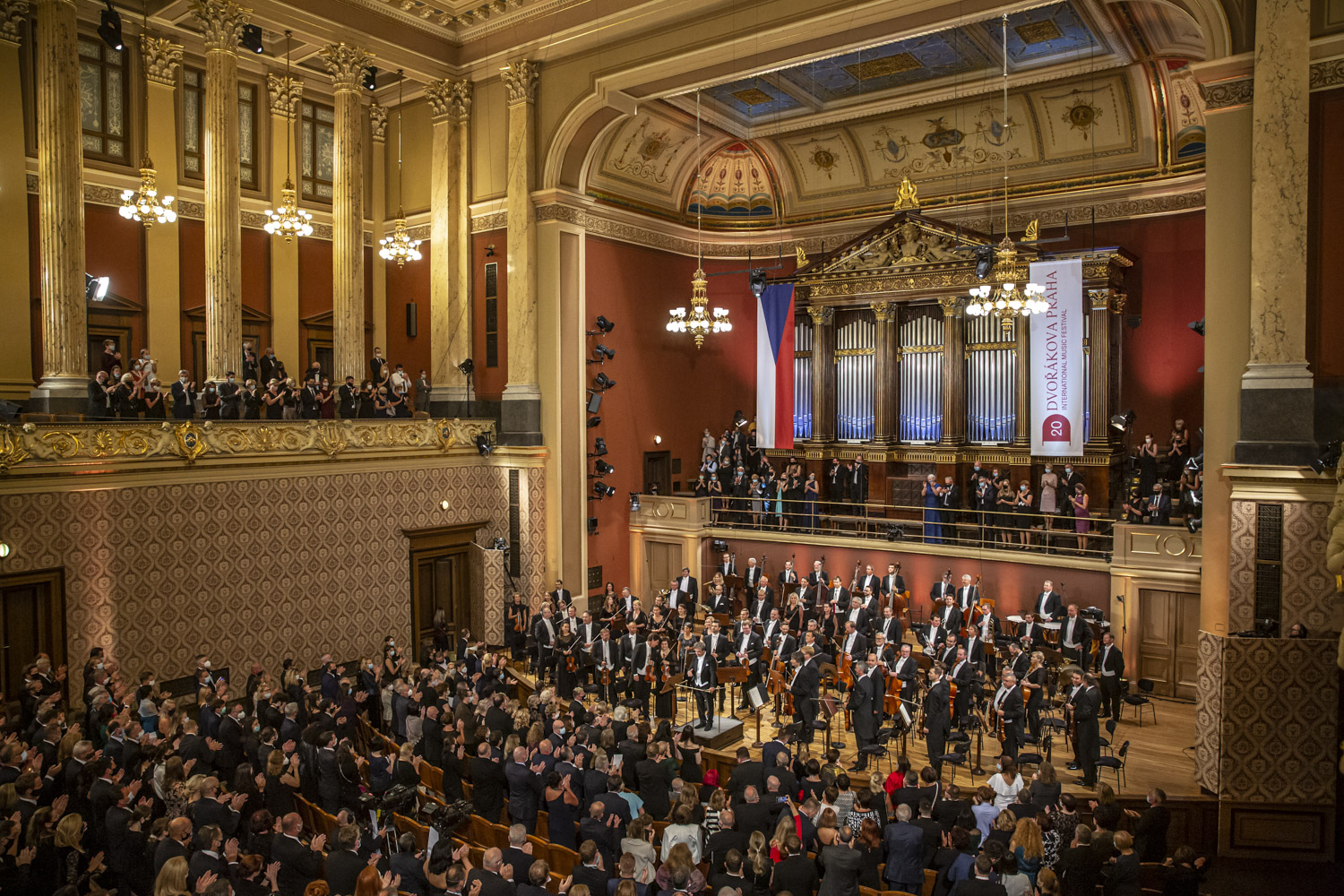
The Rudolfinum is one of the most important Neo-Renaissance edifices in the Czech Republic. In its conception as a multi-purpose cultural centre it was quite unique in Europe at the time of its construction. Based on a joint design by two outstanding Czech architects, Josef Zítek and Josef Schultz, a magnificent building was erected serving for concerts, as a gallery, and as a museum. The grand opening on 7 February 1885 was attended by Crown Prince Rudolph of Austria, in whose honour the structure was named. In 1896 the very first concert of the Czech Philharmonic Orchestra took place in the Rudolfinum's main concert hall, under the baton of the composer Antonín Dvořák whose name was later bestowed on the hall.