Felix Mendelssohn-Bartholdy: Symphony No. 3 in A Minor, Op. 56, “Scottish”
Richard Strauss: A Hero’s Life, symphonic poem, Op. 40
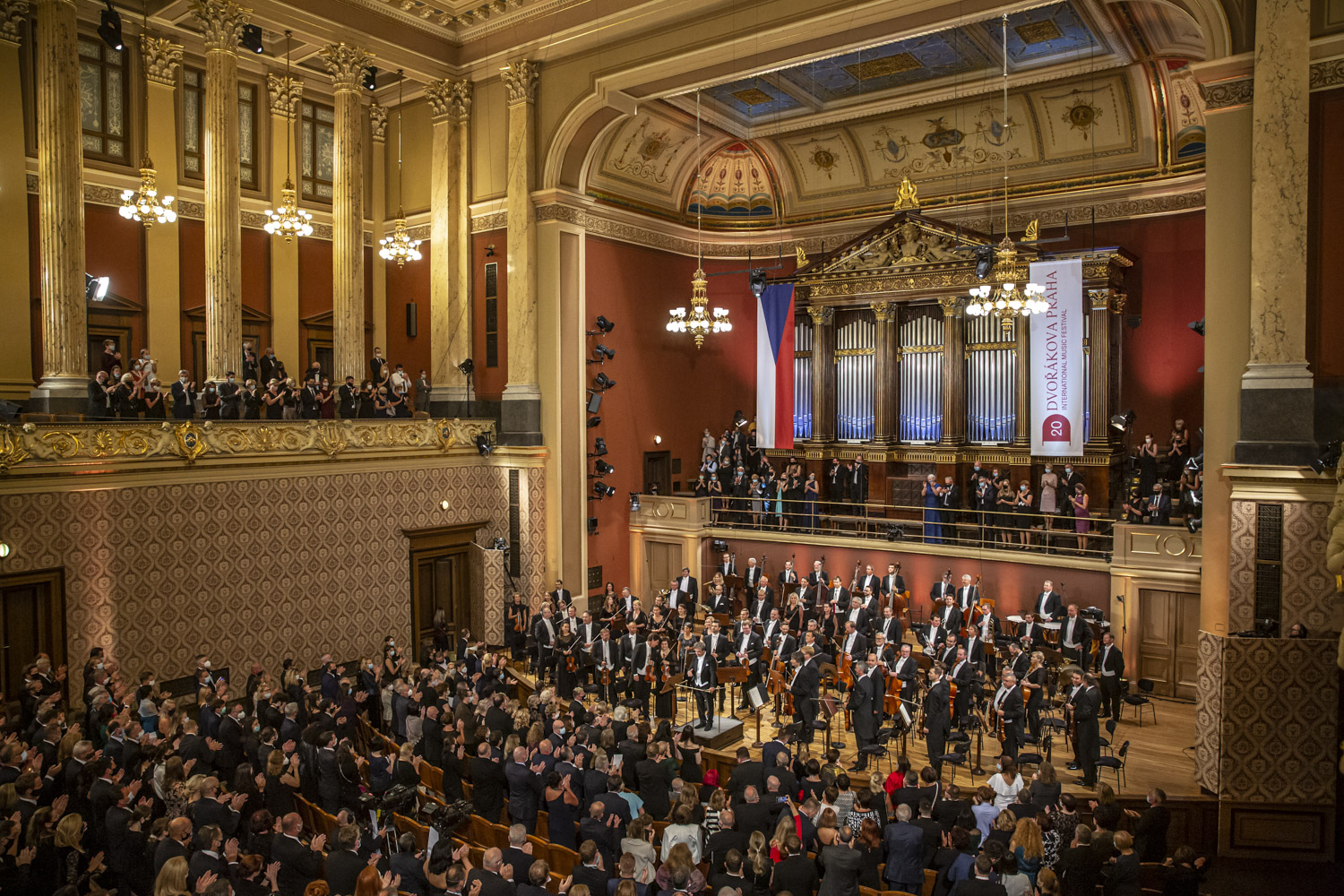
Those who watched this season’s New Year’s Concert of the Vienna Philharmonic could not have failed to notice that at the orchestra’s helm was one of today’s most prominent conductors – Christian Thielemann. This year’s Dvořák Prague Festival is bringing that amazing combination to the Rudolfinum. Thielemann created a stir eight years ago guest conducting at the Dvořák Prague Festival for what was his very first appearance in the Czech Republic. At the time, he brought his Staatskapelle Dresden, and he declared that in his view, Dresden, Prague, and Vienna belong to the same family and breathe the same musical air. We should also hear something familiar from the music of Felix Mendelssohn and of another composer celebrating an anniversary, although not a musician of Czech descent, Richard Strauss (born in 1864 in Munich). Both composers are part of the foundation of the German repertoire, which Thielemann approaches with a tremendous imagination for sound. At the festival, we will hear first-class performances of the music of our closest neighbours, who have always influenced the Czech arts – whether as inspiration or as competition. All of that is concentrated in Mendelssohn’s Scottish Symphony, for which the composer took inspiration from places connected with the life of Mary, Queen of Scots, and in the symphonic poem Ein Heldenleben, Strauss’s musical autobiography containing quotes from many of his earlier works.
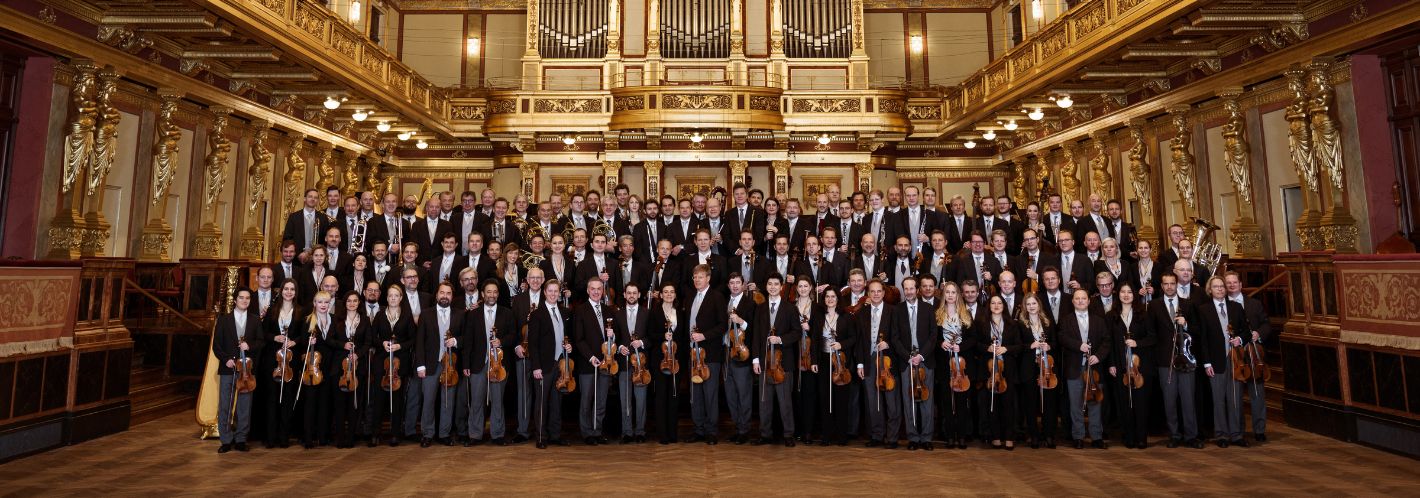
There is perhaps no other musical ensemble more closely associated with the history and tradition of European classical music than the Vienna Philharmonic. In the course of more than 180 years, this orchestra has experienced and influenced the course of musical history around the world. Even to this day, prominent soloists and conductors refer to the unique "Viennese Sound" as the outstanding quality that sets it apart from other orchestras.
The fascination that the orchestra has held since its foundation by Otto Nicolai in 1842 for prominent composers and conductors, as well as for audiences all over the world, is based upon the conscious maintenance of a homogenous musical style which is carefully bequeathed from one generation to the next, as well as a unique history and organizational structure. The pillars of the 'Philharmonic Idea', which remain valid even today, are a democratic organization that places the entire artistic and organizational decision-making process in the hands of the musicians themselves, and a close symbiosis with the Vienna State Opera Orchestra. Vienna Philharmonic statutes stipulate that only musicians from the opera orchestra can become members of the Vienna Philharmonic.
Another unique feature of this democratic structure is that the orchestra itself is solely responsible for the organization of concerts and the selection of repertoire, as well as the engaging of conductors and soloists. In 1860, the Subscription Concert series was introduced, for which one conductor was engaged for an entire season. These concerts formed a solid artistic and economic basis that remains in place to this day. Beginning in 1933, the orchestra adapted a system of guest conductors, which promotes a wide spectrum of artistic encounters with the most prominent conductors of each generation.
The orchestra's touring activity commenced at the beginning of the 20th century and has since taken the orchestra to all continents on the globe. In recent years, this has included regularly scheduled concerts in Germany, Japan, the USA and China.
In 2018, the Vienna Philharmonic Orchestra Academy was founded. The academy students are selected in accordance with a strict, internationally oriented audition process and trained at the highest level during a two-year course of study.
The Vienna Philharmonic has made it its mission to communicate the humanitarian message of music into the daily lives and consciousness of its listeners. From the beginning, the orchestra has displayed a strong social consciousness, characterized by a commitment to individuals in need and the fostering of young musicians.
The orchestra has been the recipient of numerous prizes and awards. Since 2008, it has been supported by its exclusive sponsor ROLEX.
The Vienna Philharmonic performs approximately 40 concerts in Vienna annually, among them the New Year's Concert and the Summer Night Concert Schönbrunn, which are broadcast in numerous countries around the world. The orchestra also has an annual summer residency at the Salzburg Festival and performs more than 50 concerts a year on its international tours. All of these activities underscore the reputation of the Vienna Philharmonic as one of the world's finest orchestras.
source: Künstleragentur Dr. Raab & Dr. Böhm
photo © Julia Wesely
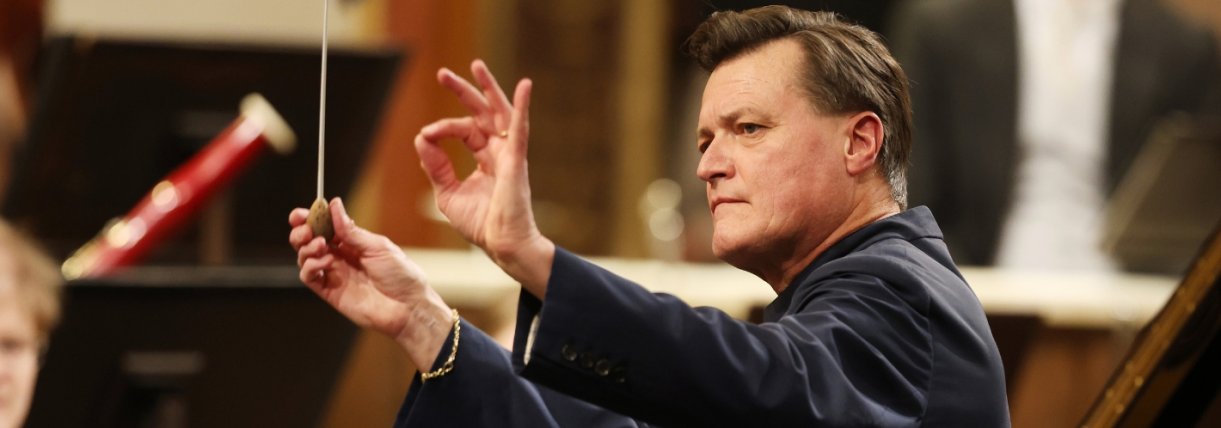
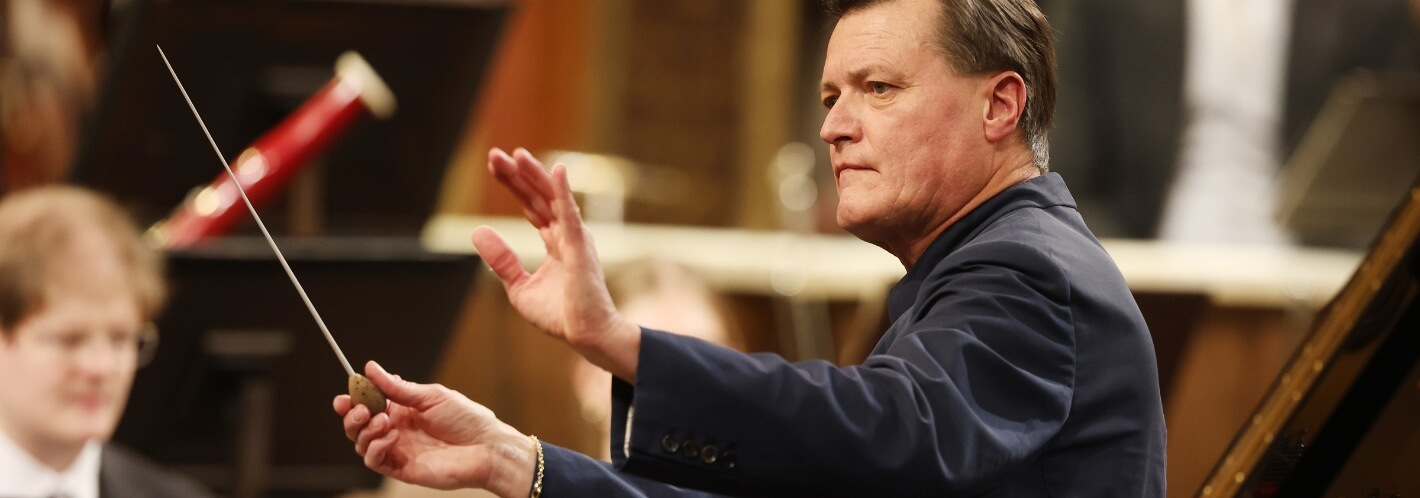
Since the 2024/2025 season Christian Thielemann has been Generalmusikdirektor of the Staatsoper Unter den Linden. Following engagements at the Deutsche Oper Berlin, in Gelsenkirchen, Karlsruhe, Hanover and Dusseldorf, in 1988 he moved to Nuremberg to occupy the post of Generalmusikdirektor. In 1997 he returned to his hometown of Berlin to direct the Deutsche Oper until 2004, when he became Music Director of the Munich Philharmonic, a post he held until 2011. From 2012/13-2023/24 he was Chief Conductor of the Staatskapelle Dresden. In addition to his position in Dresden, Thielemann was Artistic Director of the Salzburg Easter Festival from 2013 to 2022.
In previous seasons Christian Thielemann has contributed greatly to the birthday celebrations for Wagner, Strauss and Beethoven. At the same time he has explored a wide range of music from Bach to Henze, Rihm and Gubaidulina in Dresden and on tour. In the Semperoper he recently conducted new productions of »Ariadne auf Naxos«, »Capriccio« and »Aida« while for the Salzburg Easter Festival he interpreted »Die Walküre«, »Tosca«, »Die Meistersinger von Nürnberg« and »Lohengrin«.Christian Thielemann maintains close ties to the Berlin Philharmonic and the Vienna Philharmonic, whose New Year’s Concert he conducted in 2019 and 2024.
He was Musical Advisor and Music Director of the Bayreuth Festival, at which he has made his mark with his interpretations every year since his debut in the summer of 2000. In addition, he has been invited to conduct the leading orchestras of Europe, the United States, Israel and Asia.
As a UNITEL exclusive artist, Christian Thielemann has a comprehensive catalogue of recordings. His most recent projects with the Staatskapelle Dresden have been to record the symphonies of Anton Bruckner and Robert Schumann, Arnold Schoenberg’s »Gurre- Lieder« as well as numerous operas.
Christian Thielemann is an honorary member of the Royal Academy of Music in London, honorary professor at Dresden’s Carl Maria von Weber College of Music and holds honorary doctorates from the »Franz Liszt« University of Music in Weimar and the Catholic University of Leuven, Belgium. In 2003 he was awarded the Order of Merit of the Federal Republic of Germany. In May 2015 he received the Richard Wagner Prize from the Richard Wagner Society of the city of Leipzig, followed by the Prize of the Semperoper Trust in October 2016. In April 2022 he was awarded the Badge of Honor of the Province of Salzburg and in July 2022 he was awarded the Coat of Arms Medal in Gold of the City of Salzburg. 2023 he received honorary membership and the Ring of Honour of the Wiener Staatsoper. In April 2024, he was made an honorary member of the Vienna Philharmonic.
His recordings have been showered with awards.
source: Künstleragentur Dr. Raab & Dr. Böhm
The Rudolfinum is one of the most important Neo-Renaissance edifices in the Czech Republic. In its conception as a multi-purpose cultural centre it was quite unique in Europe at the time of its construction. Based on a joint design by two outstanding Czech architects, Josef Zítek and Josef Schultz, a magnificent building was erected serving for concerts, as a gallery, and as a museum. The grand opening on 7 February 1885 was attended by Crown Prince Rudolph of Austria, in whose honour the structure was named. In 1896 the very first concert of the Czech Philharmonic Orchestra took place in the Rudolfinum's main concert hall, under the baton of the composer Antonín Dvořák whose name was later bestowed on the hall.