Arthur Honegger: Symphony No. 3, ʻSymphonie Liturgiqueʻ
Johannes Brahms: Symphony No. 4 in E Minor, Op. 98
When it comes to an unquestionably great orchestra like the Vienna Philharmonic, it would be wasteful not to take advantage of the chance to have more than one concert, especially considering that this orchestra – one of the best in the world – comes with the ageless Herbert Blomstedt. After performing Schubert’s “Unfinished” and Bruckner’s “Romantic” symphonies on the first night, the programme for the second evening offers a link between Paris and Vienna. The first half of the concert will feature the Symphony No. 3 (“Symphonie Liturgique”) by Arthur Honegger, who was of Swiss origin but was a member of a group of Parisian composers known as Les Six. He was fascinated by modern technologies (he shared with Dvořák a love of locomotives) and sport, as can be seen from his inter-war compositions Pacific 231 and Rugby. His “Symphonie Liturgique” (1946) was influenced directly by the events of the Second World War. In it, Honegger put his compositional mastery at the service of a profound meditation on the horrors of war and the desire for peace. Like Honegger’s work, Brahms’s Symphony No. 4 is music of great depth, ending with a brilliant passacaglia. With Brahms, the Vienna Philharmonic and Maestro Blomstedt return to their core repertoire.
The Vienna Philharmonic will be making its first festival appearance a day earlier with a programme of music by Franz Schubert and Anton Bruckner.
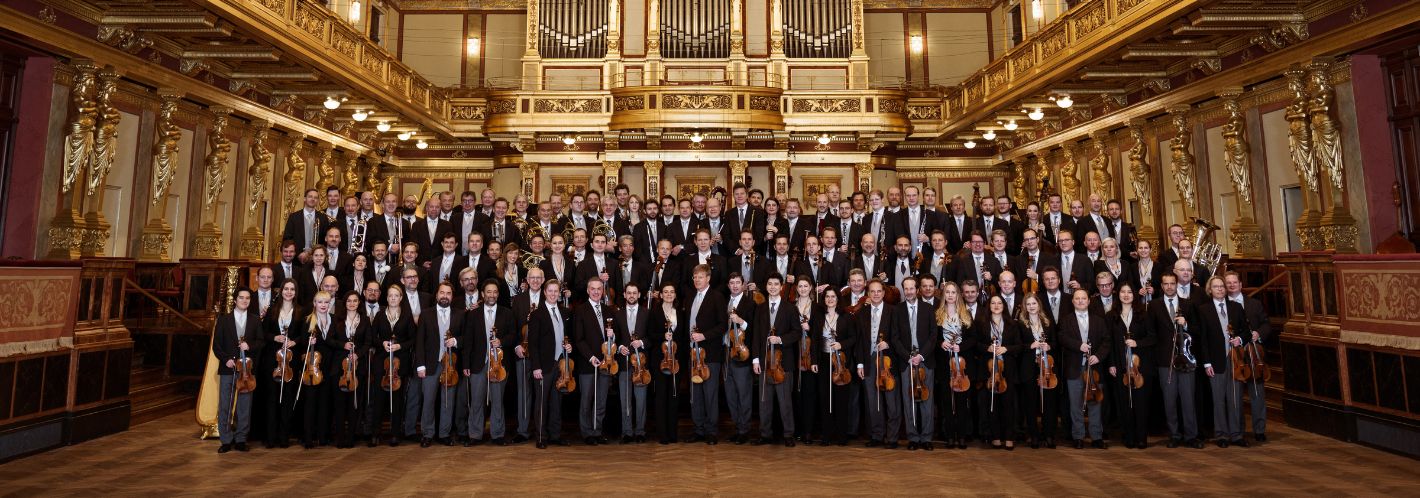
There is perhaps no other musical ensemble more closely associated with the history and tradition of European classical music than the Vienna Philharmonic. In the course of more than 180 years, this orchestra has experienced and influenced the course of musical history around the world. Even to this day, prominent soloists and conductors refer to the unique "Viennese Sound" as the outstanding quality that sets it apart from other orchestras.
The fascination that the orchestra has held since its foundation by Otto Nicolai in 1842 for prominent composers and conductors, as well as for audiences all over the world, is based upon the conscious maintenance of a homogenous musical style which is carefully bequeathed from one generation to the next, as well as a unique history and organizational structure. The pillars of the 'Philharmonic Idea', which remain valid even today, are a democratic organization that places the entire artistic and organizational decision-making process in the hands of the musicians themselves, and a close symbiosis with the Vienna State Opera Orchestra. Vienna Philharmonic statutes stipulate that only musicians from the opera orchestra can become members of the Vienna Philharmonic.
Another unique feature of this democratic structure is that the orchestra itself is solely responsible for the organization of concerts and the selection of repertoire, as well as the engaging of conductors and soloists. In 1860, the Subscription Concert series was introduced, for which one conductor was engaged for an entire season. These concerts formed a solid artistic and economic basis that remains in place to this day. Beginning in 1933, the orchestra adapted a system of guest conductors, which promotes a wide spectrum of artistic encounters with the most prominent conductors of each generation.
The orchestra's touring activity commenced at the beginning of the 20th century and has since taken the orchestra to all continents on the globe. In recent years, this has included regularly scheduled concerts in Germany, Japan, the USA and China.
In 2018, the Vienna Philharmonic Orchestra Academy was founded. The academy students are selected in accordance with a strict, internationally oriented audition process and trained at the highest level during a two-year course of study.
The Vienna Philharmonic has made it its mission to communicate the humanitarian message of music into the daily lives and consciousness of its listeners. From the beginning, the orchestra has displayed a strong social consciousness, characterized by a commitment to individuals in need and the fostering of young musicians.
The orchestra has been the recipient of numerous prizes and awards. Since 2008, it has been supported by its exclusive sponsor ROLEX.
The Vienna Philharmonic performs approximately 40 concerts in Vienna annually, among them the New Year's Concert and the Summer Night Concert Schönbrunn, which are broadcast in numerous countries around the world. The orchestra also has an annual summer residency at the Salzburg Festival and performs more than 50 concerts a year on its international tours. All of these activities underscore the reputation of the Vienna Philharmonic as one of the world's finest orchestras.
source: Künstleragentur Dr. Raab & Dr. Böhm
photo © Julia Wesely
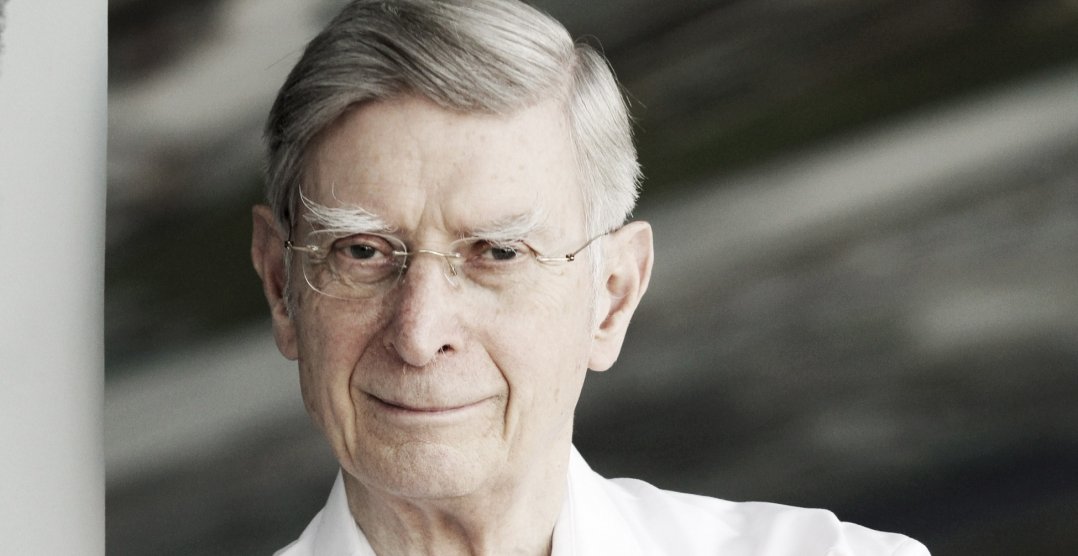
The legendary Swedish conductor Herbert Blomstedt first came to wider attention of the musical public back in 1953 when he won the Koussevitzky Prize, and just two years later he won the conducting competition in Salzburg. A year before that, he had made his debut with the Stockholm Philharmonic. During his career, he has been at the helm of several of the world’s leading orchestras, including the Oslo Philharmonic, the Staatskapelle Dresden, the San Francisco Symphony, and the Gewandhausorchester in Leipzig. Maestro Blomstedt has won several international awards, honorary doctorates, and honorary conducting posts. His scope as a performer is enormously broad, but he is most noted for his unparalleled Bruckner performances characterised by analytically precise interpretation of the musical notation and depth and soulfulness of expression. Remarkably, even at over 90, he continues his tireless cooperation with several leading orchestras with tremendous artistic commitment.
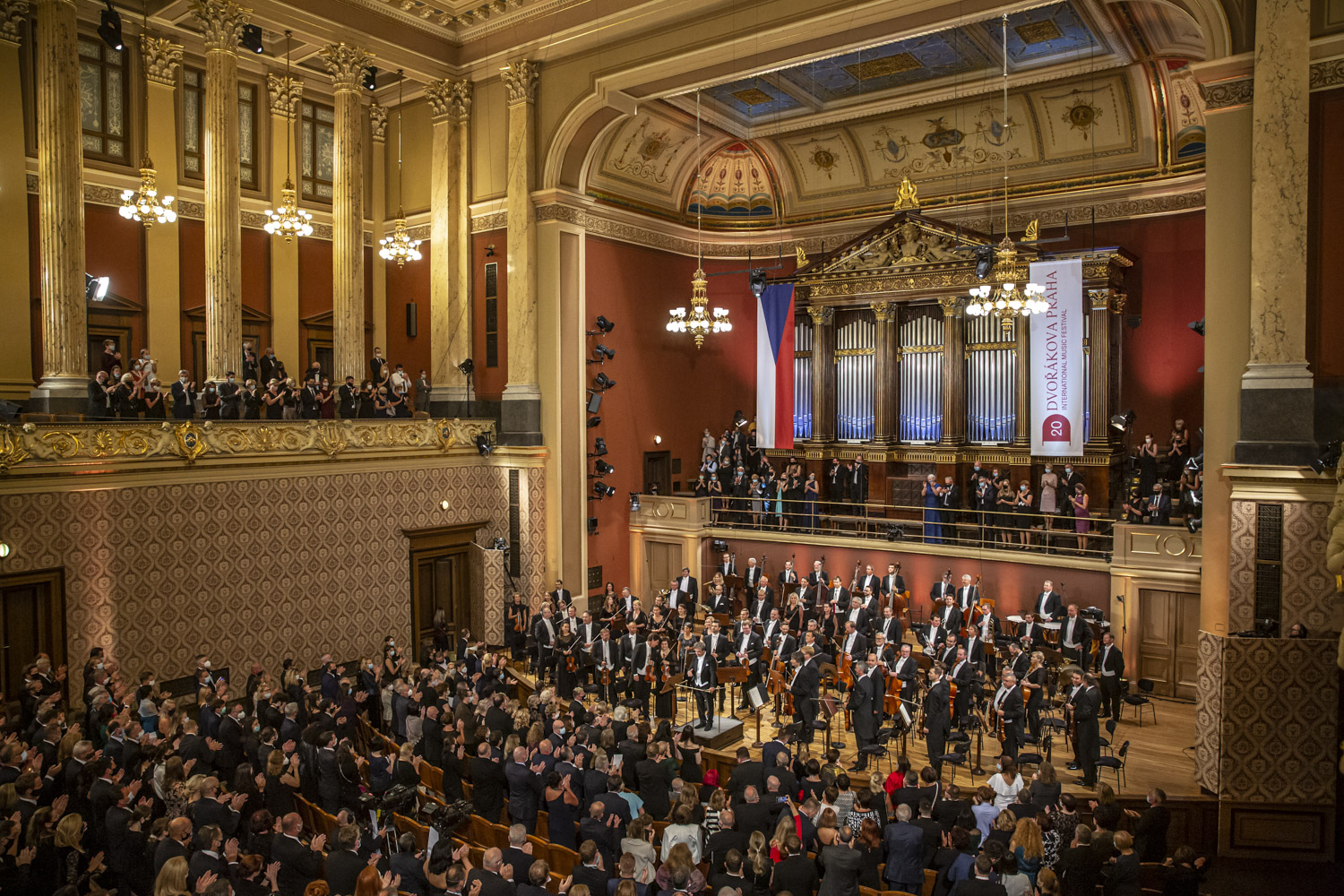
The Rudolfinum is one of the most important Neo-Renaissance edifices in the Czech Republic. In its conception as a multi-purpose cultural centre it was quite unique in Europe at the time of its construction. Based on a joint design by two outstanding Czech architects, Josef Zítek and Josef Schultz, a magnificent building was erected serving for concerts, as a gallery, and as a museum. The grand opening on 7 February 1885 was attended by Crown Prince Rudolph of Austria, in whose honour the structure was named. In 1896 the very first concert of the Czech Philharmonic Orchestra took place in the Rudolfinum's main concert hall, under the baton of the composer Antonín Dvořák whose name was later bestowed on the hall.