Johannes Brahms: Piano Concerto No. 2 in B flat Major, Op. 83
Antonín Dvořák: Symphony No. 8 in G Major, Op. 88, B. 163, ‘English’
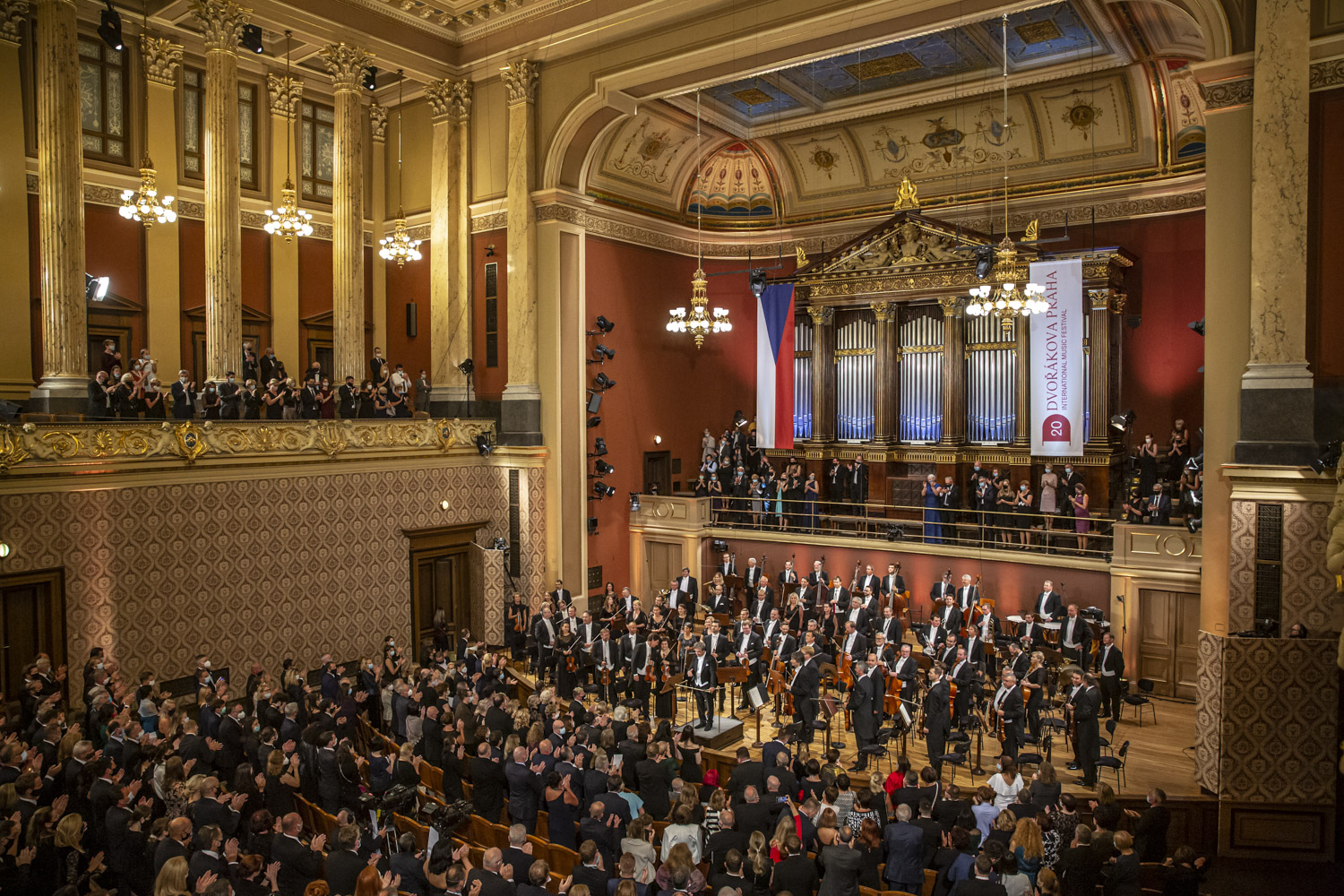
The Vienna Philharmonic is renowned as an outstanding orchestra that is partial to traditional, more conservative methods, including the use of a particular type of French horn, which will be heard at the start of the evening’s performance. Its alluring sounds, opening Brahms’s Piano Concerto No. 2, are an invitation for everyone to listen to the latest news from near and far. This is perfectly justified, as the Rudolfinum will see the Vienna Philharmonic performing under the baton of conductor Jakub Hrůša, with Igor Levit, a pianist now more German than Russian, joining them as a soloist.
The programme also features Dvořák’s Symphony No. 8 in G Major, sometimes called ‘English’. This is a reference to its premiere in London, the current home of Jakub Hrůša, the most successful contemporary Czech conductor, who has also been appointed Music Director of the prestigious Royal Opera House in Covent Garden.
Johannes Brahms, one of the greatest composers among the many Viennese masters, will have a welcome presence here in Prague, albeit for a short while. As a citizen of the world, Levit serves as a reminder that music transcends national boundaries. Ultimately, music cannot be stifled by other limitations either: during the height of the coronavirus pandemic, Levit streamed 50 “house concerts” from his home in Berlin.
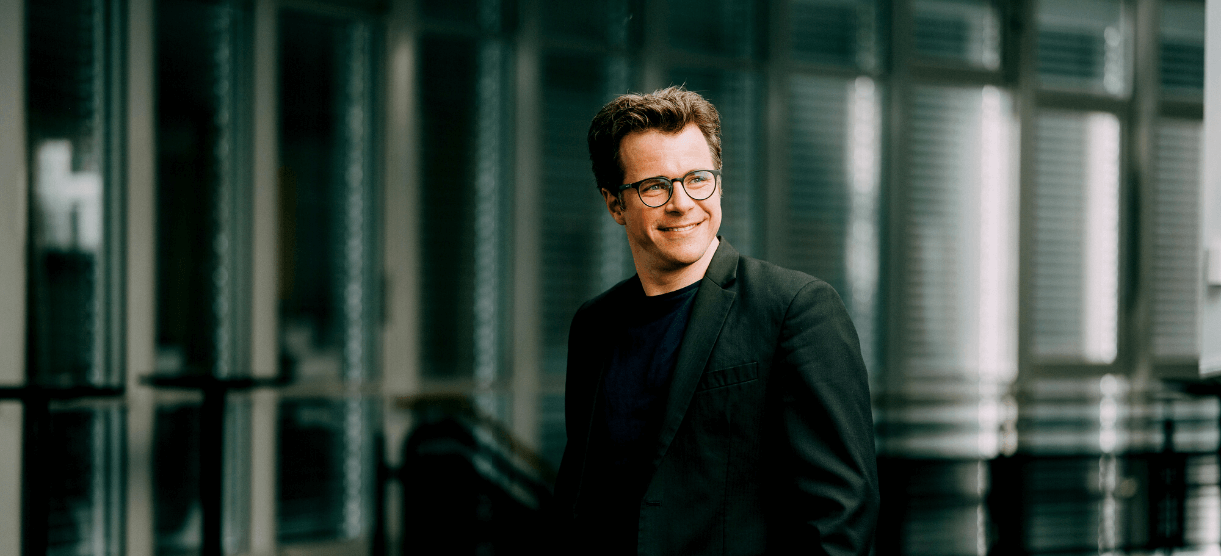
There is perhaps no other musical ensemble more closely associated with the history and tradition of European classical music than the Vienna Philharmonic. In the course of more than 180 years, this orchestra has experienced and influenced the course of musical history around the world. Even to this day, prominent soloists and conductors refer to the unique "Viennese Sound" as the outstanding quality that sets it apart from other orchestras.
The fascination that the orchestra has held since its foundation by Otto Nicolai in 1842 for prominent composers and conductors, as well as for audiences all over the world, is based upon the conscious maintenance of a homogenous musical style which is carefully bequeathed from one generation to the next, as well as a unique history and organizational structure. The pillars of the 'Philharmonic Idea', which remain valid even today, are a democratic organization that places the entire artistic and organizational decision-making process in the hands of the musicians themselves, and a close symbiosis with the Vienna State Opera Orchestra. Vienna Philharmonic statutes stipulate that only musicians from the opera orchestra can become members of the Vienna Philharmonic.
Another unique feature of this democratic structure is that the orchestra itself is solely responsible for the organization of concerts and the selection of repertoire, as well as the engaging of conductors and soloists. In 1860, the Subscription Concert series was introduced, for which one conductor was engaged for an entire season. These concerts formed a solid artistic and economic basis that remains in place to this day. Beginning in 1933, the orchestra adapted a system of guest conductors, which promotes a wide spectrum of artistic encounters with the most prominent conductors of each generation.
The orchestra's touring activity commenced at the beginning of the 20th century and has since taken the orchestra to all continents on the globe. In recent years, this has included regularly scheduled concerts in Germany, Japan, the USA and China.
In 2018, the Vienna Philharmonic Orchestra Academy was founded. The academy students are selected in accordance with a strict, internationally oriented audition process and trained at the highest level during a two-year course of study.
The Vienna Philharmonic has made it its mission to communicate the humanitarian message of music into the daily lives and consciousness of its listeners. From the beginning, the orchestra has displayed a strong social consciousness, characterized by a commitment to individuals in need and the fostering of young musicians.
The orchestra has been the recipient of numerous prizes and awards. Since 2008, it has been supported by its exclusive sponsor ROLEX.
The Vienna Philharmonic performs approximately 40 concerts in Vienna annually, among them the New Year's Concert and the Summer Night Concert Schönbrunn, which are broadcast in numerous countries around the world. The orchestra also has an annual summer residency at the Salzburg Festival and performs more than 50 concerts a year on its international tours. All of these activities underscore the reputation of the Vienna Philharmonic as one of the world's finest orchestras.
source: Künstleragentur Dr. Raab & Dr. Böhm
photo © Julia Wesely
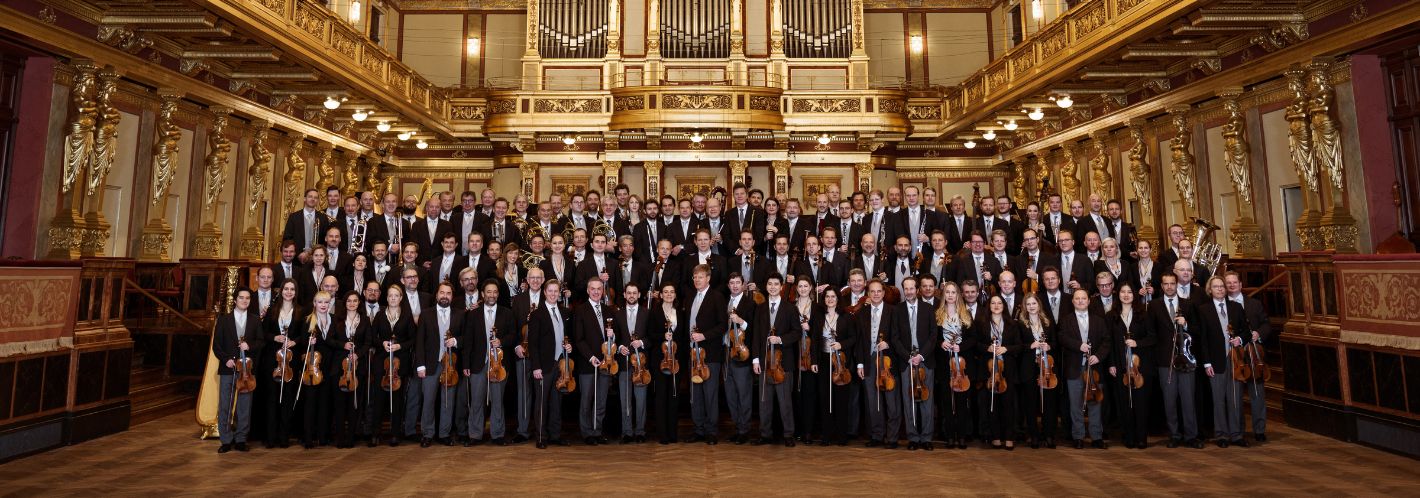
Jakub Hrůša is Chief Conductor of the Bamberg Symphony and Principal Guest Conductor of both the Czech Philharmonic and the Orchestra dell’Accademia Nazionale di Santa Cecilia. From autumn 2025, he will take up the post of Music Director at the Royal Opera at Covent Garden in London.
He frequently appears as a guest conductor with the world’s greatest orchestras, including the Berlin, Vienna, Munich and New York Philharmonics, the Bavarian Radio, NHK, Chicago and Boston Symphonies, the Leipzig Gewandhaus, Lucerne Festival, Royal Concertgebouw, Mahler Chamber and the Cleveland Orchestra, the Orchestre Philharmonique de Radio France, Dresden Staatskapelle, Orchestre de Paris, and Tonhalle Orchester Zürich.
He has led opera productions for the Vienna State Opera, the Royal Opera House, Opéra National de Paris, Zurich Opera, and the Glyndebourne Festival. In 2022, he made his debut at the Salzburg Festival with a new production of Káťa Kabanová.
For his recordings with the Bamberg Symphony, he received an ICMA for Hans Rott’s 1st Symphony in 2023, previously an ICMA for Bruckner’s 4th Symphony, as well as the Jahrespreis der Deutschen Schallplattenkritik for Mahler's 4th Symphony, as well as a BBC Music Magazine Award for Dvořák and Martinů Piano Concertos with Ivo Kahánek. In addition, he has received Gramophone and BBC Music Magazine Award nominations for Martinů Violin Concertos with Frank Peter Zimmermann.
Hrůša studied at Prague’s Academy of Performing Arts, where his teachers included Jiří Bělohlávek. He is President of the International Martinů Circle and The Dvořák Society. He was the inaugural recipient of the Sir Charles Mackerras Prize, and in 2020 was awarded the Antonín Dvořák Prize by the Czech Republic’s Academy of Classical Music, and – with the Bamberg Symphony – the Bavarian State Prize for Music. In 2023, Jakub Hrůša was awarded Honorary Membership to the Royal Academy of Music in London.
source: Bamberger Symphoniker
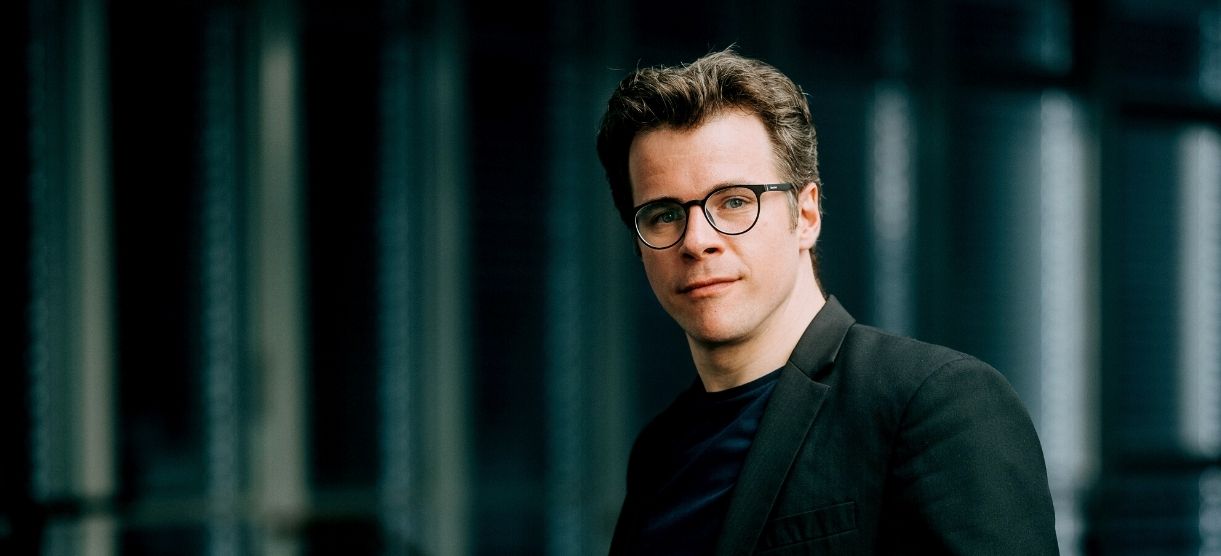
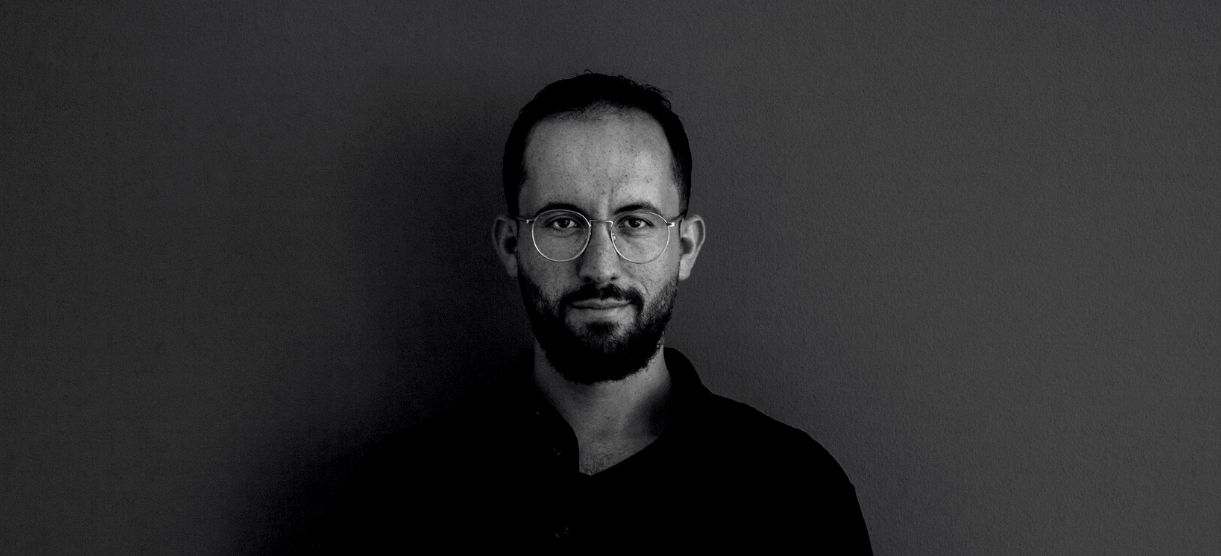
With an alert and critical mind, Igor Levit places his art in the context of social events and understands it as inseparably linked to them. The New York Times describes him as one of the “most important artists of his generation”. Igor Levit is Musical America’s “Recording Artist of the Year 2020” and the 2018 Gilmore Artist. In June 2022 his Album “On DSCH” has been awarded the “Recording of the Year” Award as well as the Instrumental Award of the BBC Music Magazine.
As a recitalist Igor Levit regularly performs at the world’s most renowned concert halls and festivals. He is regular soloist with the world’s leading orchestras such as the Cleveland Orchestra, the Gewandhausorchester Leipzig, the Royal Concertgebouw Orchestra and the Vienna Philharmonic. Igor Levit opened the 2022 Schleswig-Holstein Musik Festival together with Alan Gilbert and the NDR Elbphilharmonieorchester followed by recitals at the Salzburger Festspiele and the Lucerne Festival as well as concerts with the Orchestra dell’Accademia Nazionale di Santa Cecilia and Sir Antonio Pappano at the Musikfest Berlin and at Hamburg’s Elbphilharmonie.
In the 2022–23 season Igor Levit presents his new recital program featuring works by Brahms, Hersch, Liszt and Wagner among others in Berlin, Hamburg, London, Madrid, Milano, New York, Paris, Prague and Rome. Igor Levit is one of Vienna’s Musikverein’s portrait artists of the 2022–23 season. In June 2023 he joins the San Francisco Symphony and Esa-Pekka Salonen for a multi-week residency. In spring 2021 Igor Levit and the Lucerne Festival announced a multi-year collaboration for a new piano festival curated by Igor Levit, its first edition to take place in May 2023. With the 2022–23 season, Igor Levit joins the Festival Heidelberger Frühling music festival as its Co-Artistic Director.
Igor Levit’s 2019 highly-acclaimed first recording of the 32 Beethoven-Sonatas was awarded the Gramophone “Artist of the Year” Award as well as the Opus Klassik in autumn 2020. In spring 2021 Hanser published Igor Levit’s first book “House Concert”, co-authored by Florian Zinnecker. Fall 2022 will see the release of Igor Levit’s new solo album for Sony Classical “Tristan” – featuring his first orchestral recording Henze’s “Tristan” with the Gewandhausorchester Leipzig and Franz Welser-Möst – as well as the release of the feature documentary “Igor Levit – No Fear” in cinemas in Germany.
Born in Nizhni Novgorod, Igor Levit moved to Germany with his family at the age of eight. He completed his piano studies in Hannover with the highest score in the history of the institute. His teachers included Karl-Heinz Kämmerling, Matti Raekallio, Bernd Goetzke, Lajos Rovatkay and Hans Leygraf. Igor Levit was the youngest participant in the 2005 International Arthur Rubinstein Competition in Tel Aviv, where he won silver, the special prize for chamber music, the audience prize and the special prize for the best performance of contemporary pieces. In spring 2019 he was appointed professor for piano at his alma mater, the University of Music, Theatre and Media Hanover.
For his political commitment Igor Levit has been awarded the 5th International Beethoven Prize in 2019 followed by the award of the "Statue B" of the International Auschwitz Committee in January 2020. His 53 Twitter-streamed live house concerts during the lockdown in spring 2020 garnered a worldwide audience, offering a sense of community and hope in a time of isolation and desperation. In October 2020 Igor Levit was recognized with the Order of Merit of the Federal Republic of Germany. In Berlin, where he makes his home, Igor Levit is playing on a Steinway D Grand Piano kindly given to him by the Trustees of Independent Opera at Sadler’s Wells.
The Rudolfinum is one of the most important Neo-Renaissance edifices in the Czech Republic. In its conception as a multi-purpose cultural centre it was quite unique in Europe at the time of its construction. Based on a joint design by two outstanding Czech architects, Josef Zítek and Josef Schultz, a magnificent building was erected serving for concerts, as a gallery, and as a museum. The grand opening on 7 February 1885 was attended by Crown Prince Rudolph of Austria, in whose honour the structure was named. In 1896 the very first concert of the Czech Philharmonic Orchestra took place in the Rudolfinum's main concert hall, under the baton of the composer Antonín Dvořák whose name was later bestowed on the hall.